Not all acne spots are the same. There are six different types of acne lesions, ranging from small blocked pores to deep, painful lumps under the skin, and each one develops in a slightly different way. Understanding which types of spots you have is the first step towards choosing the right treatment, because what works for blackheads will not necessarily work for cysts.
This guide explains the six types of acne, what causes each one, how to tell them apart, and when it is time to see a dermatologist. It is also important to remember that acne is a progressive condition, so treating it early is the best way to protect your skin from scarring.
What Are the Different Types of Acne?
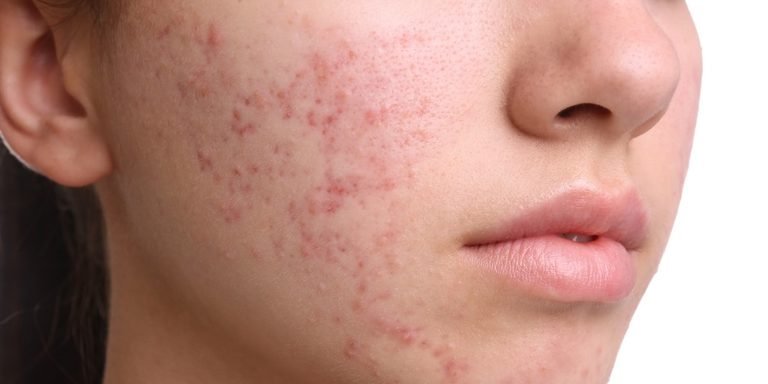
Acne develops when pores become clogged with sebum (the skin’s natural oil) and dead skin cells. From there, spots fall into two broad groups. Non-inflammatory acne includes whiteheads and blackheads, which are clogged pores without redness or swelling. Inflammatory acne includes papules, pustules, nodules and cysts, which develop when bacteria overgrow inside a clogged pore and trigger inflammation.
Most people with acne have more than one type of spot at the same time. The deeper the inflammation sits in the skin, the more painful the spot tends to be, and the higher the risk of scarring.
| Type | What it looks like | Inflammatory? | Scarring risk |
|---|---|---|---|
| 1. Whiteheads | Small, smooth, skin-coloured bumps | No | Low |
| 2. Blackheads | Small, flat or slightly raised dark dots | No | Low |
| 3. Papules | Small, red, tender bumps with no visible pus | Yes | Moderate |
| 4. Pustules | Like papules, with a white or yellow centre | Yes | Moderate |
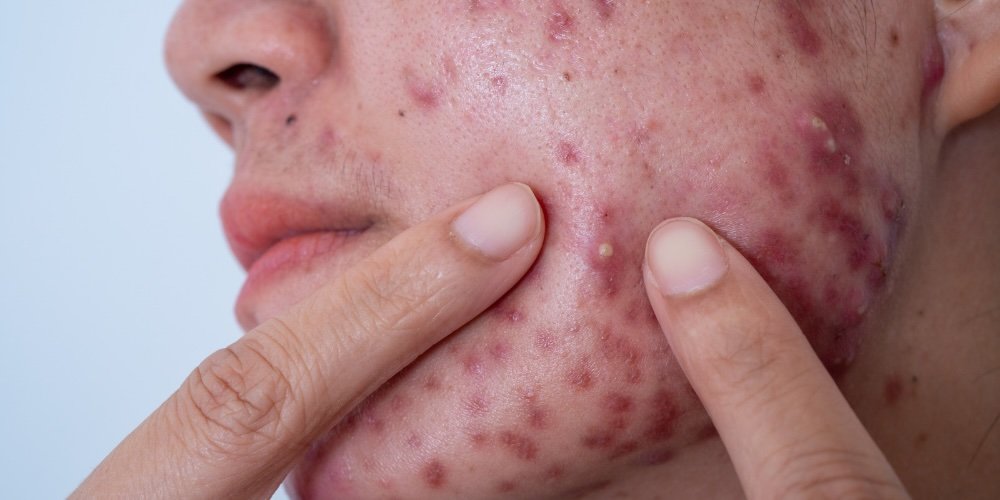
| 5. Nodules | Tender, deep lumps larger than 5 mm | Yes | High |
| 6. Cysts | Tender, deep, pus-filled nodules | Yes | Highest |
The 6 Types of Acne Explained
1. Whiteheads
Whiteheads are pores that have been completely clogged by sebum and dead skin cells. They appear as smooth, skin-coloured bumps and are most often found in areas rich in sebaceous glands, such as the forehead, nose and chin.
Struggling with whiteheads? Learn how to get rid of whiteheads.
2. Blackheads
Blackheads are partially clogged pores that are open to the air. Their dark colour is caused by oxidation, a reaction with the air, and not by dirt. This is why scrubbing harder will not remove them and can actually make acne worse. Blackheads are often confused with sebaceous filaments, which are a normal part of the pore.
Learn more about sebaceous filaments vs blackheads if you are unsure.
3. Papules
Papules are small red bumps that develop due to overgrowth of bacteria within clogged pores. They are raised and tender, with no visible head. On lighter skin they look pink or red, while on brown and black skin they can appear brown or purple.
4. Pustules
Pustules look similar to papules but have a white or yellow centre containing pus, which is made up of dead white blood cells. They are what most people think of as a typical spot, and they are often the most tempting to squeeze, which increases the risk of marks and scarring.
5. Nodules
Nodules are tender, deep-seated lumps that are more than 5 mm in diameter. They develop due to further overgrowth of bacteria and the expansion of inflammation deeper into the skin, with the release of inflammatory mediators. Nodules can last for weeks, rarely respond to over-the-counter treatments, and carry a high risk of scarring.
6. Cysts
Cysts are the most severe type of acne lesion. They are tender, pus-filled nodules that sit deep within the skin and carry a high risk of scarring. Acne with nodules and cysts usually needs prescription treatment, and for a single painful spot, see our guide on how to treat a cystic pimple.
How Non-Inflammatory and Inflammatory Acne Differ:
- Whiteheads and blackheads are clogged pores without redness or pain
- Papules, pustules, nodules and cysts are red, swollen and often tender
- Non-inflammatory acne sits at the surface of the skin
- Inflammatory acne can extend deep into the skin
- Non-inflammatory acne carries a low risk of scarring
- Nodules and cysts carry the highest risk of scarring and dark or red marks
What Causes Acne?
Every type of acne begins in the same place, a blocked pore, but several factors influence how far it progresses.
1. Excess Oil
The sebaceous glands produce sebum to keep the skin supple. When they produce too much, the excess oil can mix with dead skin cells and block the pore.
2. Dead Skin Cells
When dead skin cells are not shed properly, they build up inside the pore and create the plug that forms a whitehead or blackhead.
3. Bacteria
Bacteria that normally live on the skin can multiply inside a blocked pore. This is what turns a simple clogged pore into a red, inflamed spot.
4. Hormones
Hormonal changes during puberty, periods, pregnancy and menopause can all increase oil production and trigger breakouts. For adult women with hormonal acne, prescription treatments like, spironolactone, may be necessary.
5. Skincare and Habits
Heavy, pore-clogging products, harsh scrubbing and picking at spots can all make acne worse and push spots deeper into the skin.
How to Identify Your Type of Acne
A dermatologist diagnosis is ideal, but these features are a good guide:
- A smooth, skin-coloured bump is likely a whitehead
- A flat or slightly raised dark dot is likely a blackhead
- A red, tender bump with no head is likely a papule
- A red bump with a white or yellow centre is likely a pustule
- A painful lump deep under the skin is likely a nodule or cyst
Some conditions can look like acne but need different treatment. Small, itchy, uniform bumps may be fungal acne, and redness with flushing across the cheeks may be rosacea. If you are unsure, we recommend booking a consultation so your skin can be assessed properly.
How we Treat Acne in our London Clinic
Acne treatment depends on which types of spot you have and how severe your acne is. Milder acne often responds well to the right skincare, while deeper nodules and cysts usually need prescription treatment from a dermatologist.
| Acne type | First steps | If it is not improving |
|---|---|---|
| Whiteheads and blackheads | Salicylic acid, topical retinoids (adapalene, retinol) | Prescription retinoids, such as tretinoin |
| Papules and pustules | Benzoyl peroxide, azelaic acid, topical retinoids | Prescription combination gels, oral antibiotics with a topical |
| Nodules and cysts | See a dermatologist early | Oral isotretinoin (Roaccutane), hormonal treatment where suitable |
1. Whiteheads and Blackheads
Comedonal acne usually responds well to salicylic acid, which works inside the pore, and topical retinoids such as adapalene, which help prevent pores from clogging in the first place.
Skincare routines and recommended products to eliminate blackheads and whiteheads
2. Papules and Pustules
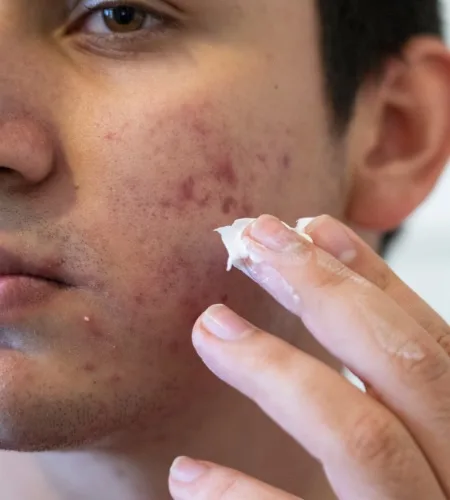
Inflamed spots respond well to ingredients such as benzoyl peroxide, azelaic acid and topical retinoids. If these are not enough, a dermatologist may recommend prescription combination gels or a course of oral antibiotics alongside a topical treatment.
Top five ingredients to treat acne
3. Nodules and Cysts
Deep, painful acne should be assessed by a dermatologist early, as it carries the highest risk of scarring. Treatment may include oral isotretinoin (Roaccutane) or hormonal treatments where appropriate. In the UK, isotretinoin can only be prescribed by a consultant dermatologist-led team.
More information on Roaccutane
Why Acne Should Not Be Left Untreated
Acne is a progressive condition. If left untreated, whiteheads and blackheads may progress into papules, pustules, nodules and even cysts. The longer inflamed spots are present, the greater the chance they will leave behind red marks, dark marks or permanent scarring.
Treating acne early, while it is still mostly whiteheads and blackheads, is far easier than treating scars later. If you already have scarring, learn more in this acne scar treatment guide, and if you are left with flat red marks, my guide to post-inflammatory erythema explains why these are not scars.
How Long Does Acne Take to Improve?
Most patients notice improvement within:
- 6 to 12 weeks with a consistent skincare routine
- Around 12 weeks with prescription creams or oral treatments
- Several months with a full course of isotretinoin
- Flare-ups can still happen, especially around hormonal changes
Patience and consistency are key, as most acne treatments take time to show their full effect.
Common Questions Asked in Clinic
What is the most severe type of acne?
Cysts are the most severe type of acne. They are deep, tender, pus-filled lumps with a high risk of scarring, and they usually need prescription treatment from a dermatologist rather than over-the-counter products.
What is the difference between nodular and cystic acne?
Both are deep, painful lumps larger than 5 mm. Nodules are firm and solid, while cysts are softer and filled with pus. Both carry a high risk of scarring and often appear together, so they should be assessed by a dermatologist early.
Is it safe to pop whiteheads or pustules?
It is best not to. Squeezing spots pushes bacteria and inflammation deeper into the skin, which increases the risk of red marks, dark marks and scarring. Targeted treatments such as salicylic acid or benzoyl peroxide are a safer way to clear them.
Are blackheads caused by dirt?
No. The dark colour of a blackhead comes from oxidation, which happens when the contents of an open pore react with the air. Scrubbing harder will not remove them and can irritate the skin, so ingredients that work inside the pore, such as salicylic acid and retinoids, are more effective.
Is fungal acne one of the types of acne?
No. Fungal acne is caused by an overgrowth of yeast in the hair follicles, not by the clogged pores and bacteria behind true acne. It usually appears as small, itchy bumps of the same size and needs antifungal treatment rather than standard acne products.
Author: Dr Derrick Phillips, Consultant Dermatologist, MBBS BSc (HONS) FRCP (Dermatology)
Last reviewed: October 2026