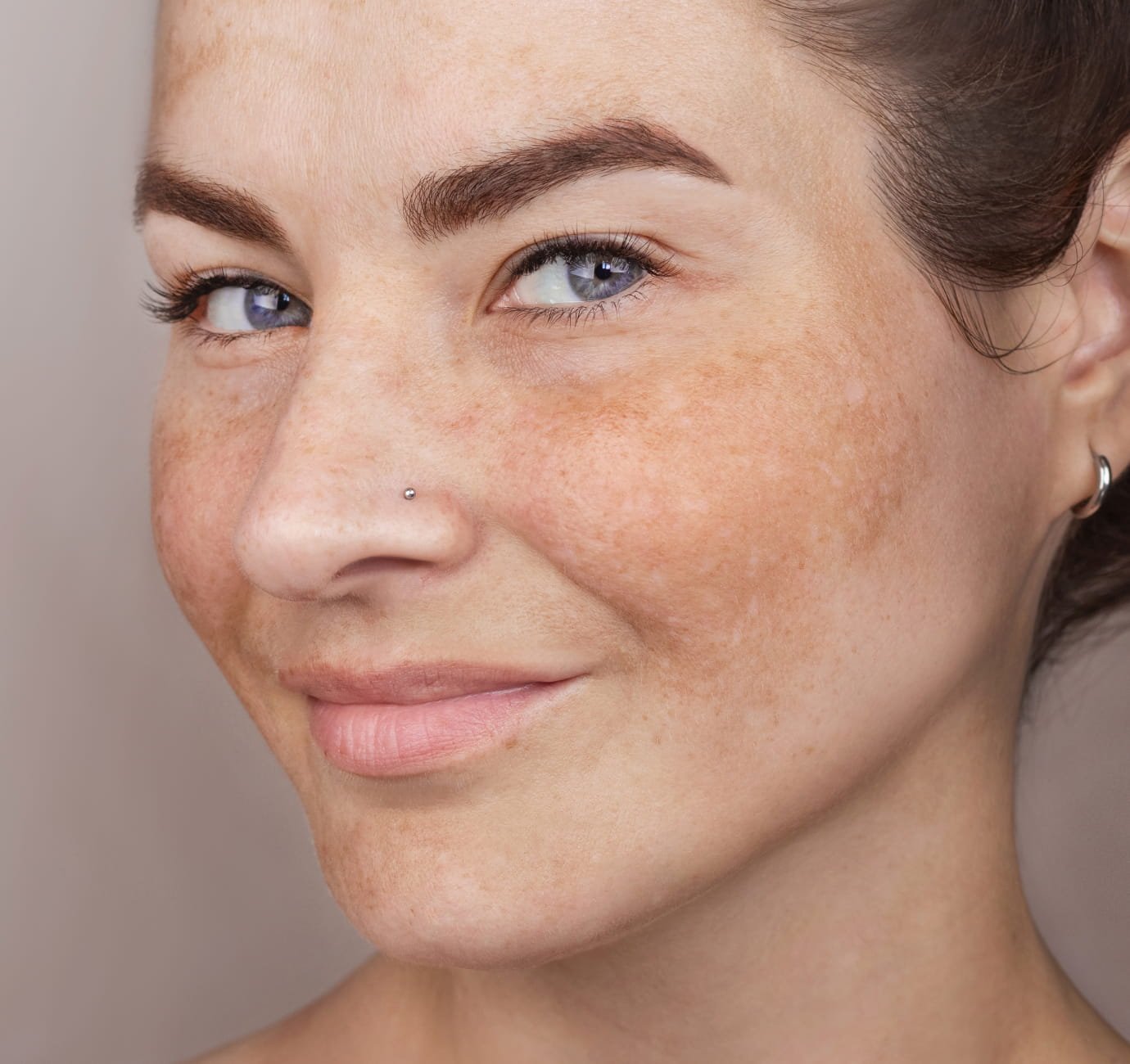
Melasma Treatment in London

Melasma is a recurring form of facial pigmentation influenced by factors including hormones, UV exposure and visible light. Dr Derrick Phillips provides specialist melasma treatment in London, with personalised plans designed to improve pigmentation and support long-term control.

Melasma diagnosis and treatment

Melasma is a common form of facial pigmentation that can be frustrating because the visible patches may fade with treatment but return over time. Hormonal influences, UV exposure and visible light can all contribute, which is why melasma usually requires ongoing management rather than a single treatment. It typically appears as symmetrical brown or grey-brown patches on the face and may be more difficult to manage in darker skin tones, where irritation or overly aggressive treatment can worsen pigmentation. Dr Derrick Phillips provides specialist melasma treatment in London, beginning with an assessment of the pattern of pigmentation, contributing factors and skin tone before developing a personalised treatment plan. The aim is to improve existing pigmentation while also addressing the factors that contribute to recurrence.

Assessment of pigmentation pattern and triggers

Treatment tailored to your skin tone

Careful management to minimise irritation

Focus on improvement and recurrence prevention

What Is melasma?

Melasma is a common pigmentation condition in which the skin produces excess melanin in certain areas of the face. It is influenced by a combination of factors, including hormones, UV exposure and visible light, which is why it behaves differently from sun spots or dark marks left after acne and other inflammation.

It is much more common in women than men and typically appears as symmetrical brown or grey-brown patches on the cheeks, upper lip, forehead, chin and bridge of the nose.

Melasma often becomes more noticeable with sun exposure and can be triggered or worsened by hormonal changes, including pregnancy, the oral contraceptive pill, perimenopause and hormone replacement therapy.

What causes hyperpigmentation?

Hyperpigmentation occurs when the skin produces excess melanin, the pigment responsible for skin colour. The trigger differs depending on the underlying condition:

Hormonal stimulation

Particularly changes in oestrogen and progesterone, can increase melanocyte activity and contribute to excess pigment production. This helps explain why melasma is commonly associated with pregnancy, the oral contraceptive pill and hormone replacement therapy.

UV exposure

Ultraviolet light is one of the most important environmental triggers and can stimulate pigment production, making existing melasma darker and increasing the likelihood of recurrence. Consistent sun protection is therefore an essential part of treatment.

Genetic predisposition

Melasma often runs in families, suggesting an inherited susceptibility to developing the condition.

Vascular changes

Melasma is not purely a disorder of pigment. Increased numbers and prominence of small blood vessels are often seen within affected skin, suggesting that a vascular component may also contribute.

Types of melasma Dr Phillips treats

Melasma can vary considerably between patients, particularly in how deeply the pigment sits within the skin and the factors contributing to it. Identifying these differences helps guide treatment and reduce the risk of making the pigmentation worse.

Epidermal melasma occurs when excess pigment is concentrated mainly within the upper layers of the skin. It typically appears as brown patches and may respond more readily to treatment than deeper forms of melasma.

Treatment usually combines consistent daily sun protection with topical treatments that reduce pigment production and help improve uneven skin tone. Depending on the individual patient, these may include prescription hydroquinone, retinoids, azelaic acid and other pigment-regulating ingredients.

Concerned about persistent facial pigmentation?

Book a consultation to discuss a personalised melasma treatment plan.

Dermal melasma occurs when excess pigment is located deeper within the skin. Because the pigmentation sits within the dermis rather than the more superficial layers of the skin, it can be more persistent and may respond more slowly to treatment.

Dr Phillips assesses the depth and distribution of the pigmentation before recommending treatment. Consistent sun protection and topical therapy remain important, while selected procedures may be considered where appropriate. Treatment is approached carefully, as excessive inflammation can worsen pigmentation, particularly in darker skin tones.

Melasma proving difficult to manage?

Book a consultation to assess your pigmentation and discuss appropriate treatment options.

Mixed melasma contains a combination of superficial epidermal pigmentation and deeper dermal pigmentation. This is a common pattern and can mean that different areas of pigmentation respond differently to treatment.

Dr Phillips assesses the depth and distribution of the pigmentation to develop an individualised treatment plan. Management typically combines consistent sun protection with topical therapy, with selected procedures considered where appropriate. As with other forms of melasma, treatment is usually gradual and may require longer-term management.

Living with persistent or recurring melasma?

Book a consultation to discuss a personalised treatment and long-term management plan.

Hormonal changes can play an important role in triggering or worsening melasma. It commonly develops during pregnancy and may also be associated with hormonal contraception, hormone replacement therapy and other periods of hormonal change.

Treatment focuses on controlling the pigmentation while also identifying factors that may be contributing to recurrence. Because hormonal influences cannot always be removed, melasma is generally managed as a chronic condition rather than something that can be permanently cleared with a single course of treatment.

Melasma triggered or worsened by hormonal changes?

Book a consultation to discuss a personalised approach to treatment and long-term management.

Melasma treatment in skin of colour

Melasma can affect all skin tones, but treatment requires particular care in darker skin because inflammation itself can stimulate further melanin production. Treatments that are too aggressive can therefore worsen pigmentation rather than improve it.

Dr Phillips tailors treatment according to skin tone, the depth and pattern of pigmentation and previous treatment history. Topical treatments and consistent photoprotection usually form the foundation of management, with laser and light treatments considered selectively where the potential benefit outweighs the risk of post-inflammatory hyperpigmentation.

Book a consultation with Dr Derrick Phillips for an accurate melasma diagnosis and a personalised treatment plan.

How Dr Phillips treats melasma

Melasma treatment is tailored to the depth and pattern of pigmentation, skin tone and individual triggers, and often combines several approaches to improve existing pigmentation and reduce the risk of recurrence:

Broad-spectrum sun protection

With daily SPF 50 forming an essential part of melasma management. UV and visible light can stimulate pigment production and contribute to recurrence.

Prescription topical treatments

Including hydroquinone, tretinoin, azelaic acid and topical tranexamic acid, used individually or in combination depending on the pigmentation and skin tone.

Compounded prescription formulations

Allowing combinations of active ingredients to be tailored to the individual patient where appropriate.

Oral treatments

Including tranexamic acid, which may be considered for selected patients following appropriate medical assessment.

Laser and light treatments

Considered selectively in appropriate patients. Because heat and inflammation can worsen melasma, the choice of device and treatment settings needs to be carefully matched to the pigmentation and skin tone.

Long-term maintenance

Because melasma is a chronic, recurrent condition. Ongoing sun protection and maintenance treatment may be needed to help keep pigmentation under control over time.

What to expect at consultation

Your consultation begins with a detailed assessment of your melasma, including the pattern and depth of pigmentation, your skin tone, hormonal history, sun exposure and any previous treatments you have tried.

Dr Phillips will explain the diagnosis, discuss realistic expectations and develop a personalised treatment plan. This will usually include sun protection and prescription topical treatment, with oral tranexamic acid or laser and light treatment considered where appropriate as part of a longer-term management strategy.

Follow-up appointments allow treatment to be reviewed and adjusted as the pigmentation improves, with maintenance treatment introduced where needed to help reduce the risk of recurrence.

Detailed assessment

Review the pattern and depth of your melasma, skin tone, hormonal history, sun exposure and previous treatments.

Diagnosis & expectations

Dr Phillips explains the diagnosis and discusses what improvement can realistically be expected.

Personalised treatment plan

Develop a tailored plan, usually combining sun protection and prescription topical treatment, with additional treatments considered where appropriate.

Review & maintenance

Monitor your progress, adjust treatment as pigmentation improves and introduce maintenance treatment where needed to help reduce recurrence.

Why choose Dr Derrick Phillips for melasma treatment in London

Melasma is a long-term condition that often requires ongoing management rather than a single course of treatment. Dr Phillips takes a careful, dermatologist-led approach, combining an understanding of the different factors that drive melasma with experience treating pigmentation across a wide range of skin tones.

Treatment is tailored to the individual, with clear discussion of realistic outcomes and the likelihood of recurrence. Where topical treatment is likely to be safer and more appropriate than laser, this will be recommended. Laser and light treatments are used selectively, with particular care in skin of colour where overly aggressive treatment can worsen pigmentation.

The aim is not only to improve the visible pigmentation, but to do so in a way that minimises the risk of treatment-induced worsening and supports longer-term control.

derrick

What to know about melasma

Melasma is a chronic pigmentation condition influenced by hormones, UV exposure and visible light, rather than simply sun damage.

It requires a different treatment approach from post-inflammatory hyperpigmentation  and solar lentigines.

Consistent sun protection is a central part of every melasma treatment plan.

Laser and light treatments need to be used carefully, as inappropriate treatment can worsen melasma.

Treatment in skin of colour requires particular care with device selection and treatment settings.

The aim is long-term control and reduction in recurrence rather than a permanent cure.

FAQs

Melasma is caused by a combination of factors, including hormonal influences, UV exposure, visible light and genetic predisposition. Hormonal changes can increase melanocyte activity, which helps explain why melasma is associated with pregnancy, the oral contraceptive pill and hormone replacement therapy. A vascular component may also contribute, with increased numbers of small blood vessels seen within areas of melasma.

No. Melasma is a specific type of hyperpigmentation with its own pattern and triggers. It usually appears as symmetrical patches on the face and behaves differently from post-inflammatory hyperpigmentation, such as dark marks left after acne or eczema, and from sun-induced pigmentation. These conditions therefore require different treatment approaches.

Melasma cannot currently be permanently cured because the skin remains prone to producing excess pigment in response to triggers such as UV exposure and hormonal change. The aim is long-term control, with improvement in the visible pigmentation and measures to reduce recurrence. Many patients achieve good long-term control with consistent sun protection, maintenance topical treatment and ongoing review where needed.

Lasers can be helpful for selected patients with melasma, but it needs to be used carefully. Inappropriate devices or overly aggressive settings can trigger inflammation and make the pigmentation worse.

Dr Phillips uses laser and light treatments selectively, including technologies such as PicoWay and Lutronic DermaV where appropriate, with the choice of device and settings tailored to the patient’s skin tone, pattern of melasma and previous treatment response.

Tranexamic acid is a medication that can help reduce the signals involved in melanin production. It can be used topically or, in selected patients, as a low-dose oral treatment for melasma.

Oral tranexamic acid has been shown to improve melasma in clinical studies, but it is not suitable for everyone and requires appropriate medical assessment before treatment.

Learn more about tranexamic acid in this in-depth guide.

Melasma can affect all skin tones. In darker skin, treatment may require additional care because inflammation or overly aggressive treatment can trigger further pigmentation. Device selection, treatment settings and the use of topical therapy therefore need to be tailored carefully to the individual skin tone.

Daily broad-spectrum SPF 50 with strong UVA protection is an essential part of melasma management. Because visible light from sunlight can also contribute to pigmentation, tinted sunscreens containing iron oxides may provide additional protection, particularly for patients with darker skin tones.

Sunscreen should be applied consistently and combined with other sun-protective measures where possible. Some of Dr Phillips’ favourites include:

Sunscreen is essential, but UV exposure is not the only factor that can influence melasma. Visible light from sunlight, hormonal changes and irritation from skincare or treatments may also contribute.

The amount of sunscreen applied, its level of UVA protection and how consistently it is reapplied can also affect protection. If melasma continues to worsen despite regular sunscreen use, it may be helpful to review the wider factors contributing to the pigmentation and adjust the treatment plan accordingly.

Explore knowledge base

Learn more about acne, treatment options and skin health through Dr Derrick Phillips' expert videos and articles. Browse practical guidance and trusted information to help you better understand your skin.

Expert melasma treatment

Melasma often requires careful diagnosis and a long-term treatment strategy. Book a consultation with Dr Derrick Phillips to receive a personalised plan based on your skin tone, contributing factors and treatment goals.