What is hair loss?
Hair loss, also known as alopecia, encompasses a wide range of conditions affecting the growth, density and distribution of hair. Some forms are temporary and reversible once the underlying cause is addressed, while others are progressive and require early treatment to preserve existing hair. Certain types of scarring alopecia can lead to permanent hair loss if not recognised and treated promptly, making an accurate diagnosis particularly important.
Hair loss affects both men and women and can have a profound psychological impact, regardless of the amount of hair loss visible to others. During your consultation, Dr Phillips considers not only the pattern and cause of hair loss but also how it is affecting your confidence and quality of life when developing your treatment plan.
Types of hair loss Dr Phillips treats:
Androgenetic alopecia Male and female pattern hair loss
Androgenetic alopecia, commonly known as male or female pattern hair loss, is the most common cause of hair loss in adults. It results from an increased sensitivity of genetically susceptible hair follicles to dihydrotestosterone (DHT), leading to gradual miniaturisation of the follicles over time. In men, it typically presents with a receding hairline and thinning at the crown, whereas in women it more commonly causes diffuse thinning over the top of the scalp with widening of the parting while the frontal hairline is usually preserved.
Because androgenetic alopecia is progressive, early treatment offers the best opportunity to preserve existing hair. Treatment may include topical or oral minoxidil and, where appropriate, finasteride or dutasteride, selected according to the pattern of hair loss, medical history and treatment goals. Dr Phillips develops an individualised treatment plan based on the extent of hair loss, scalp health and your long-term expectations.
Noticed a receding hairline, thinning crown or widening parting?
Book a consultation for an accurate diagnosis and personalised treatment plan.
Alopecia areata Immune-mediated patchy hair loss
Alopecia areata is an immune-mediated condition in which the immune system attacks the hair follicles, causing sudden, patchy hair loss. It typically presents as one or more well-defined round or oval patches on the scalp but can also affect the beard, eyebrows, eyelashes and other areas of the body. In some patients, it progresses to complete scalp hair loss (alopecia totalis) or complete body hair loss (alopecia universalis).
The course of alopecia areata varies considerably. Some patients develop a single patch that regrows spontaneously, while others experience recurrent or more extensive hair loss requiring ongoing treatment. Management depends on the extent and severity of the disease and may include potent topical corticosteroids, intralesional corticosteroid injections and, for suitable patients with more extensive disease, oral Janus kinase (JAK) inhibitors. Dr Phillips carefully assesses each case and provides realistic guidance on the likely course of the condition and the treatments most appropriate for you.
Developed sudden, patchy hair loss?
Book a consultation for an accurate diagnosis and personalised treatment plan.
Telogen effluvium Diffuse hair shedding following illness, stress, hormonal change or nutritional deficiency
Alopecia areata is an immune-mediated condition in which the immune system attacks the hair follicles, causing sudden, patchy hair loss. It typically presents as one or more well-defined round or oval patches on the scalp but can also affect the beard, eyebrows, eyelashes and other areas of the body. In some patients, it progresses to complete scalp hair loss (alopecia totalis) or complete body hair loss (alopecia universalis).
The course of alopecia areata varies considerably. Some patients develop a single patch that regrows spontaneously, while others experience recurrent or more extensive hair loss requiring ongoing treatment. Management depends on the extent and severity of the disease and may include potent topical corticosteroids, intralesional corticosteroid injections and, for suitable patients with more extensive disease, oral Janus kinase (JAK) inhibitors. Dr Phillips carefully assesses each case and provides realistic guidance on the likely course of the condition and the treatments most appropriate for you.
Developed sudden patchy hair loss?
Book a consultation with Dr Derrick Phillips for an accurate diagnosis and an individualised treatment plan.
Traction alopecia Hair loss caused by prolonged tension on the hair follicles
Traction alopecia is hair loss caused by prolonged tension on the hair follicles. It is most commonly associated with tightly worn hairstyles such as braids, cornrows, weaves, extensions and tightly secured ponytails. It is particularly common in people with Afro-textured hair and is one of the few forms of hair loss that is largely preventable if recognised and treated early.
The condition typically begins with gradual thinning along the frontal hairline and temples, although it can affect any area subjected to repeated tension. In its early stages, the hair follicles remain intact and regrowth is often possible. However, persistent traction can lead to scarring of the hair follicles, resulting in permanent hair loss if treatment is delayed.
Dr Phillips carefully assesses the pattern and stage of traction alopecia before developing an individualised treatment plan. Early management focuses on reducing tension on the hair, controlling any associated scalp inflammation and supporting regrowth where possible. In more advanced cases, treatment aims to preserve the remaining follicles and optimise the health of the surrounding scalp.
Noticed gradual thinning around your hairline or temples?
Book a consultation to assess the cause and discuss appropriate treatment.
Scarring alopecias Including lichen planopilaris, frontal fibrosing alopecia and central centrifugal cicatricial alopecia (CCCA)
Scarring alopecias are a group of inflammatory conditions that permanently damage the hair follicles, replacing them with scar tissue. Unlike most other forms of hair loss, the hair cannot regrow once a follicle has been destroyed, making early diagnosis and treatment essential. This group includes conditions such as lichen planopilaris, frontal fibrosing alopecia and discoid lupus erythematosus.
Scarring alopecia often presents with progressive hair loss accompanied by symptoms such as itching, burning, tenderness or scalp discomfort, although some patients notice hair loss before any symptoms develop. Frontal fibrosing alopecia is increasingly recognised in women and typically presents as a gradual recession of the frontal and temporal hairline, often accompanied by loss of the eyebrows and, less commonly, the eyelashes. Because the early signs can be subtle, diagnosis is sometimes delayed.
Dr Phillips has particular expertise in recognising and managing scarring alopecias. During your consultation, he carefully assesses the pattern of hair loss and scalp inflammation and, where appropriate, arranges further investigations such as a scalp biopsy to confirm the diagnosis. Treatment is then directed at controlling inflammation and preserving the remaining hair follicles.
Experiencing progressive hair loss or scalp symptoms?
Book a consultation for an accurate diagnosis and prompt treatment.
Hair loss in women Including hormonally driven hair loss, postpartum hair shedding and female pattern hair loss
Hair loss in women is common and often presents differently from the classic pattern seen in men. Many women experience diffuse thinning rather than a receding hairline, and because the causes are varied, establishing the correct diagnosis is essential. Female hair loss may be due to androgenetic alopecia, telogen effluvium, alopecia areata, scarring alopecias or a combination of these conditions.
Hormonal and medical factors are particularly important to consider. Iron deficiency, thyroid disease, polycystic ovary syndrome (PCOS), postpartum hormonal changes and the menopause can all contribute to hair loss or excessive shedding. Dr Phillips carefully assesses these and other potential causes during your consultation and arranges targeted investigations, including blood tests where appropriate, before developing an individualised treatment plan.
Concerned about thinning or increased hair loss?
Book a consultation to identify possible causes and discuss a personalised treatment plan.
Alopecia barbae Alopecia areata affecting the beard
Alopecia barbae is a form of alopecia areata that affects the beard, causing smooth, well-defined round or oval patches of hair loss that typically appear suddenly. Like alopecia areata affecting the scalp, it is an immune-mediated condition in which the immune system attacks the hair follicles. The course is unpredictable: some patches regrow spontaneously, while others persist, recur or become more extensive over time.
Although the affected area may be relatively small, alopecia barbae can have a significant psychological impact because of the beard's importance to facial appearance. Treatment depends on the extent and severity of the condition and may include potent topical corticosteroids, intralesional corticosteroid injections and, for suitable patients with more extensive disease, oral Janus kinase (JAK) inhibitors. Dr Phillips assesses each case individually and provides realistic guidance on the likely course of the condition and the treatments most appropriate for you.
Developed sudden, patchy beard hair loss?
Book a consultation for an accurate diagnosis and personalised treatment plan.
Scalp disorders associated with hair loss Including seborrhoeic dermatitis, psoriasis and folliculitis
Several inflammatory scalp conditions can contribute to hair loss or increase shedding if left untreated. This is why every hair loss consultation with Dr Phillips includes a careful examination of the scalp, not just the pattern of hair loss.
Seborrhoeic dermatitis
One of the most common scalp conditions and can contribute to increased hair shedding by disrupting the normal scalp environment. Although it does not cause permanent hair loss, controlling the underlying inflammation is often an important part of improving overall scalp health.
Scalp folliculitis
It causes inflammation of the hair follicles and may present with tender or itchy spots on the scalp. If inflammation is severe or persistent, some forms of folliculitis can result in scarring and permanent hair loss, making early diagnosis and treatment important.
Scalp psoriasis
It can also contribute to increased hair shedding during active flares. While psoriasis itself does not permanently damage the hair follicles, controlling inflammation and reducing scratching helps support normal hair growth and scalp health.
Dr Phillips assesses the scalp as an integral part of every hair loss consultation, identifying and treating any underlying scalp disease alongside the hair loss itself to ensure all contributing factors are addressed.
Hair loss accompanied by itching, scaling or scalp inflammation?
Book a consultation to assess your scalp and discuss appropriate treatment.
How hair loss is treated
Treatment is tailored to the type, cause and stage of hair loss, and may include one or more of the following:
Topical minoxidil
To stimulate hair growth in androgenetic alopecia and selected other forms of hair loss
Oral minoxidil
A low-dose treatment that may be used as an alternative or adjunct to topical therapy in appropriate patients
Platelet-rich plasma (PRP)
Using your own concentrated platelets to stimulate hair follicles in selected patients with androgenetic alopecia and certain other types of hair loss
Finasteride or dutasteride
For androgenetic alopecia in men and selected women.
Intralesional corticosteroid injections
For localised alopecia areata.
Oral Janus kinase (JAK) inhibitors
For suitable patients with moderate-to-severe alopecia areata
Anti-inflammatory treatment
To control inflammation and preserve remaining hair follicles in scarring alopecias
Correction of nutritional deficiencies
Including iron deficiency and other nutritional or metabolic abnormalities where identified
Management of underlying scalp disease
Treating conditions such as seborrhoeic dermatitis, psoriasis or folliculitis that may contribute to hair shedding or scalp inflammation
What to expect from your consultation
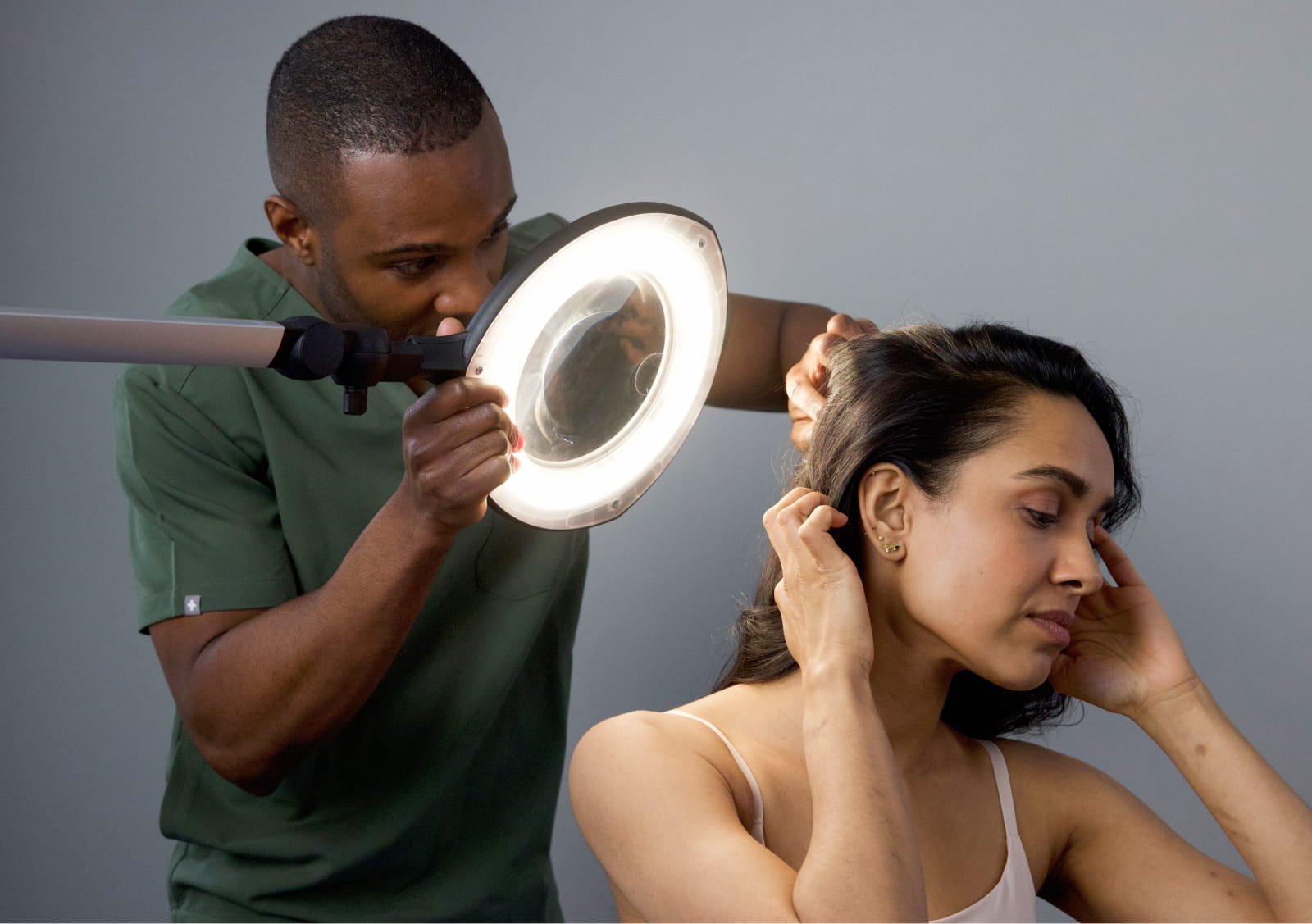
Your consultation begins with a comprehensive assessment of your hair loss, including its onset and progression, family history, medical history, hormonal factors, hair care practices and any potential triggers. This is followed by a detailed examination of your scalp and hair to identify the pattern of hair loss and any underlying scalp disease. Where appropriate, blood tests are arranged at your first appointment so the results can help guide treatment decisions. Dr Phillips will explain the likely diagnosis, discuss any further investigations that may be needed and develop an individualised treatment plan, with realistic guidance on what can be achieved and which forms of hair loss are reversible.
Hair loss assessment
Review when your hair loss began, how it has progressed, family and medical history, hormonal factors, hair care and potential triggers.
Scalp and hair examination
Examine your scalp and hair to identify the pattern of hair loss and look for any underlying scalp condition.
Investigations and diagnosis
Arrange blood tests where appropriate and discuss the likely diagnosis and whether any further investigations are needed.
Personalised treatment plan
Develop an individualised plan with realistic guidance on treatment options, expected results and whether the hair loss may be reversible.
Why choose Dr Derrick Phillips for hair loss in London
Dr Phillips spent 12 years working within the NHS, including as a Consultant Dermatologist at Imperial College Healthcare NHS Trust, managing the full spectrum of hair disorders. His expertise spans common causes of hair loss such as androgenetic alopecia through to complex inflammatory and scarring alopecias, with particular experience in hair disorders affecting women and patients with Afro-textured hair. His approach is centred on establishing the correct diagnosis before developing an individualised treatment plan.

Dr Phillips's approach to hair loss is built on:
Accurate diagnosis guides every treatment decision.
Treatment is tailored to the underlying cause, stage and pattern of hair loss.
Hormonal, nutritional and inflammatory causes are carefully assessed where appropriate.
Early recognition and treatment of scarring alopecias to preserve remaining hair follicles.
Particular expertise in hair disorders affecting women and patients with Afro-textured hair.
Honest guidance on what is reversible, what can be stabilised and what treatment can realistically achieve.
FAQs
What causes hair loss in women?
Hair loss in women has many possible causes, including androgenetic alopecia, telogen effluvium, hormonal changes associated with polycystic ovary syndrome (PCOS), pregnancy or the menopause, alopecia areata and scarring alopecias. Dr Phillips carefully assesses these and other potential causes during your consultation and arranges targeted investigations, including blood tests where appropriate, before developing an individualised treatment plan.
Can hair loss be reversed?
It depends on the cause. Telogen effluvium is often reversible once the underlying trigger has been addressed. Androgenetic alopecia can usually be slowed and, in many cases, partially reversed with treatment, although it cannot be cured. Scarring alopecias cause permanent loss of affected hair follicles, making early diagnosis and treatment essential to prevent further progression.
What is the difference between alopecia areata and pattern hair loss?
Androgenetic alopecia is driven by increased sensitivity of genetically susceptible hair follicles to dihydrotestosterone (DHT) and follows a gradual, predictable pattern of thinning. Alopecia areata is an immune-mediated condition that causes sudden, patchy hair loss and can affect any hair-bearing area. Because the underlying causes are different, the treatments are different.
Is traction alopecia permanent?
Not always. In its early stages, traction alopecia is often reversible if the tension on the hair follicles is removed and treatment is started promptly. Once scarring has developed, however, the affected follicles cannot recover, making early diagnosis particularly important.
How long does hair loss treatment take to work?
Hair grows slowly, so most treatments require at least 3–6 months before meaningful improvement becomes apparent. A full assessment of treatment response often takes around 12 months. Dr Phillips discusses realistic expectations and treatment timelines during your consultation.
Does minoxidil work for all types of hair loss?
No. Minoxidil is most effective for androgenetic alopecia and may also be used alongside other treatments for selected non-scarring forms of hair loss. It does not treat the underlying cause of immune-mediated or scarring alopecias, which is why an accurate diagnosis is essential before treatment begins.
Can scalp conditions cause hair loss?
Yes. Inflammatory scalp conditions such as seborrhoeic dermatitis, folliculitis and scalp psoriasis can contribute to increased hair shedding. Certain forms of folliculitis may also cause permanent hair loss if inflammation leads to scarring. As part of every hair loss consultation, Dr Phillips carefully examines the scalp and treats any underlying scalp disease alongside the hair loss itself.
What is alopecia barbae?
Alopecia barbae is a form of alopecia areata affecting the beard, causing smooth, well-defined patches of hair loss. Like alopecia areata affecting the scalp, it is an immune-mediated condition with an unpredictable course: some patches regrow spontaneously, while others require treatment. Management may include potent topical corticosteroids, intralesional corticosteroid injections and, for suitable patients with more extensive disease, oral Janus kinase (JAK) inhibitors.
Should I have blood tests for hair loss?
Not everyone with hair loss requires blood tests. Dr Phillips recommends investigations based on your medical history, pattern of hair loss and examination findings. Where appropriate, blood tests can help identify contributing factors such as iron deficiency, thyroid disease or hormonal abnormalities and ensure treatment is directed at the underlying cause.
Explore knowledge base
Explore expert guidance on hair loss, from understanding different causes and treatment options to supporting hair growth and long-term management.
