Many people mistake sebaceous filaments for blackheads, but they are not the same thing. Sebaceous filaments are a normal part of the skin that help transport oil from the sebaceous glands to the skin’s surface, whereas blackheads are a type of acne caused by pores becoming clogged with oil and dead skin cells.
Although both appear as small dark dots on the skin, commonly found on the nose, sebaceous filaments are usually lighter in colour, flatter, and more evenly distributed. Blackheads tend to be darker, larger, and caused by pore blockages that have oxidised after exposure to air.
Understanding the difference is important as treatment expectations are different. Blackheads can often be cleared with acne treatments, while sebaceous filaments cannot be permanently removed because they are a normal skin structure.
In this dermatologist-led guide by Dr Derrick Phillips, you’ll learn how to tell the difference between sebaceous filaments vs blackheads, what causes them, and the most effective treatments for improving the appearance of clogged pores and enlarged pores.
What Are Sebaceous Filaments?
Sebaceous filaments are tiny, thread-like structures that line the inside of your pores. Their role is to help move sebum (oil) from the sebaceous glands to the skin’s surface, where it helps keep the skin moisturised and protected.
Everyone has sebaceous filaments, but they tend to be more noticeable in people with:
- Oily skin
- Larger pores
- Increased sebum production
Sebaceous filaments are most commonly seen on:
- The nose
- Chin
- Forehead
Unlike acne, sebaceous filaments are a normal part of healthy skin.
What Are Blackheads?
Blackheads, also known as open comedones, are a type of non-inflammatory acne.
They develop when a pore becomes blocked with oil, dead skin cells, and debris. Because the pore remains open, the material inside is exposed to air and undergoes oxidation, causing the characteristic dark appearance.
Blackheads are considered a form of acne and may occur alongside other blemishes such as whiteheads and inflammatory spots.
Sebaceous Filaments vs Blackheads
Although they can look similar at first glance, there are several key differences.
| Sebaceous Filaments | Blackheads |
| Normal part of the skin | A form of acne |
| Help transport oil to the skin’s surface | Caused by clogged pores |
| Usually light grey, yellow, or flesh-coloured | Dark brown or black |
| Flat and evenly distributed | Larger and more distinct |
| Common on the nose | Can occur anywhere acne develops |
| Return naturally after removal | Can often be cleared with acne treatment |
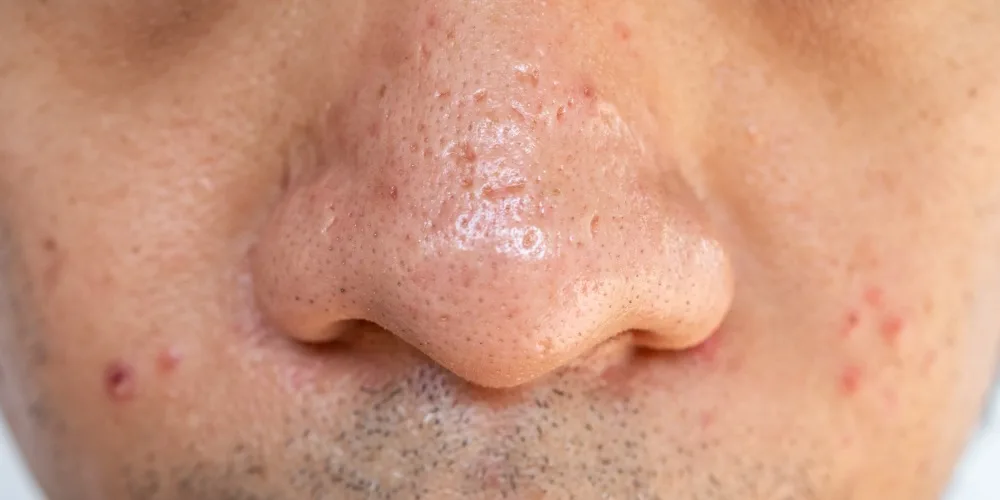
A useful clue is distribution. If you notice hundreds of tiny dots spread evenly across your nose, they are more likely to be sebaceous filaments than blackheads.
Sebaceous Filaments vs Whiteheads
Sebaceous filaments and whiteheads can look similar at first glance, but they are very different conditions.
Whiteheads are a type of acne (closed comedones) that develop when a pore becomes blocked with oil, dead skin cells, and debris beneath the skin’s surface. They typically appear as small white or flesh-coloured bumps and may be slightly raised.
A simple way to tell the difference is that whiteheads tend to appear as individual raised bumps, whereas sebaceous filaments often appear as many small dots spread evenly across an area of skin.
While treatments such as salicylic acid and retinoids can help improve the appearance of both, whiteheads can often be cleared completely, whereas sebaceous filaments are a normal skin feature that can only be minimised, not permanently removed.
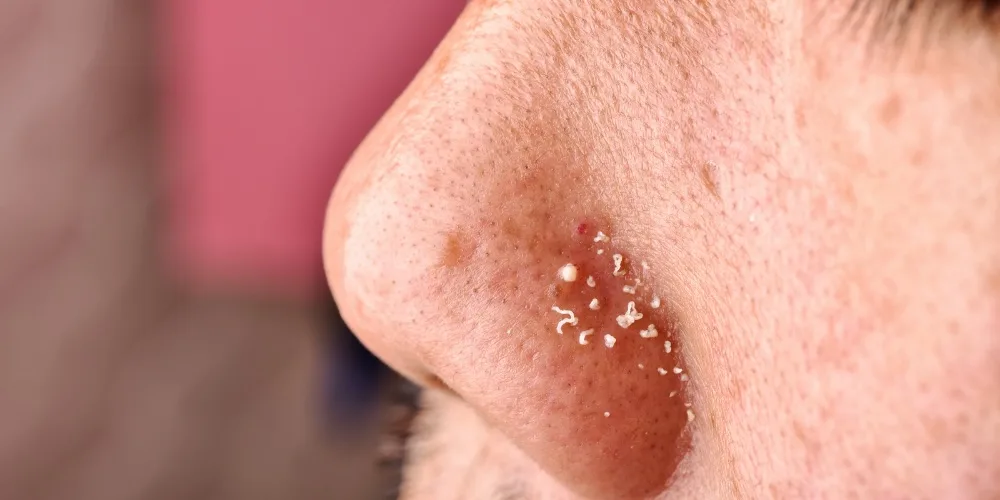
What Comes Out When You Squeeze a Sebaceous Filament?
Many people discover sebaceous filaments when using pore strips or squeezing their pores.
When extracted, sebaceous filaments often appear as thin, waxy, thread-like material. While this can temporarily make pores look clearer, the filament will naturally reform because it is part of the pore’s normal structure.
This is why sebaceous filaments cannot be permanently removed. The goal is not to eliminate them, but to make them less noticeable.
Reducing excess oil production and preventing pore congestion can help minimise their appearance.
How to Treat Sebaceous Filaments and Blackheads
The good news is that many of the same ingredients help improve both conditions.
Salicylic Acid
Salicylic acid is a beta-hydroxy acid (BHA) that penetrates into the pore and helps dissolve excess oil and dead skin cells.
A salicylic acid cleanser can help:
- Reduce pore congestion
- Improve blackheads
- Make sebaceous filaments less noticeable
- Control excess oil production
Dr Derrick Phillips recommends the CeraVe SA Cleanser.
Topical Retinoids
Retinoids increase skin-cell turnover and help prevent pores from becoming clogged.
Used consistently, they can:
- Reduce blackheads
- Improve overall skin texture
- Minimise the appearance of enlarged pores
- Make sebaceous filaments less visible
Because retinoids can be irritating initially, it’s best to introduce them gradually.
Learn more about retinoids in this in-depth guide.
What About Pore Strips for Sebaceous Filament Removal?
Pore strips can temporarily remove surface debris and sebaceous filament contents, making pores appear cleaner for a short period, but they do not treat the underlying cause. Filaments typically return within days.
For long-term improvement, salicylic acid and retinoids are usually more effective.
Why Are Sebaceous Filaments So Noticeable on the Nose?
Sebaceous filaments are most noticeable on the nose because this area contains a high concentration of sebaceous (oil) glands. People with oily skin or enlarged pores may notice them more prominently.
The nose is also one of the areas where pores tend to be naturally larger, making sebaceous filaments easier to see.
Frequently Asked Questions in Clinic
Can Sebaceous Filaments Become Blackheads?
Sebaceous filaments and blackheads are different conditions, but excessive oil production and poor pore turnover can contribute to both.
A sebaceous filament itself does not become a blackhead. However, if a pore becomes clogged with excess oil and dead skin cells, a blackhead can develop.
Can I permanently remove sebaceous filaments?
Because sebaceous filaments are a normal component of the pore, they will naturally reform after extraction. Treatment focuses on reducing their appearance rather than eliminating them permanently.
What is the best treatment for sebaceous filaments?
A consistent skincare routine containing salicylic acid and a topical retinoid is often the most effective approach for reducing the appearance of sebaceous filaments.
Are sebaceous filaments a sign of poor hygiene?
No, sebaceous filaments are a normal skin structure and are not caused by dirt or poor cleansing habits.
Should I squeeze sebaceous filaments?
Frequent squeezing can irritate the skin and make pores appear larger over time. It’s best to maintain a daily skin care routine aimed to reduce oil and shrink pores.