Retinoids are one of the most researched and clinically proven categories of skincare ingredients available, yet they remain one of the most misunderstood. If you’ve ever wondered which retinoid you should be using, Dr Derrick Phillips breaks it down in this article.
Patients regularly arrive at our One Welbeck Skin and Allergy Clinic or Skin 55 Dermatology clinic in London having used the wrong type of retinoid for their concern, or having abandoned a retinoid altogether after experiencing irritation early on, assuming it simply wasn’t working.
The retinoid family includes everything from gentle over-the-counter options like retinol, to prescription-strength tretinoin. Understanding the difference between a retinol vs retinal vs Tretinoin, matters. As Dr Derrick Phillips explains in this video, the best retinoid is not necessarily the strongest one. It is the one you can use consistently.
This guide breaks down the key differences between retinol, retinal (retinaldehyde), adapalene, tretinoin, and other retinoids in the family, so you can make an informed choice for your skin.
What Are Retinoids?
Retinoids are a family of compounds derived from vitamin A. They work by binding to receptors in the skin cells, accelerating cell turnover, stimulating collagen production, and regulating the processes that lead to acne, pigmentation, and the visible signs of ageing.
The key difference between a retinol, retinal and tretinoin, is where each sits in this conversion process. Retinol is a retinoid, but not all retinoids are retinol. The term “retinoid” is the umbrella category, and retinol is one specific compound within it. Tretinoin, adapalene, retinal, and bakuchiol are all different options with different strengths, mechanisms, and uses.
“Almost everyone can benefit from having a retinoid in their skincare routine, and the key is to start low and gradually build up over time,” Dr Derrick Phillips in MSN.
Retinol vs Retinal vs Tretinoin: OTC vs Perscription Reinoids
Not all retinoids are equal. They differ in potency, speed of conversion, and the side effects they are likely to cause. Here is how the main options compare, from the most gentle to the most potent: persistence is a key warning sign, particularly for any lesion that does not resolve over several weeks.
| Retinoid | Availability | Strength | Best For |
| Bakuchiol | OTC | Very Gentle | Sensitive Skin, Pregnancy |
| Retinol | OTC | Mild | Anti-Ageing, Mild Acne |
| Retinal (Retinaldehyde) | OTC | Moderate | Anti-Ageing, Moderate Acne, Pigmentation |
| Adapalene 0.1% | OTC( Differin) | Moderate | Comedonal & Inflammatory Acne |
| Adapalene 0.3% | Perscription | Moderate-Strong | Moderate to Severe Acne |
| Trifarotene | Perscription | Strong | Body Acne |
| Tretinoin | Perscription | Strongest | Photoageing, Stubborn Acne, Wringkles |
Each Retinoid Explained
Bakuchiol — The Plant Based, Gentle Alternative
Bakuchiol is a plant-derived ingredient that mimics the action of retinol without being a true retinoid. It is the most gentle option on the list, making it suitable for those with very sensitive skin, or anyone who has previously struggled to tolerate retinoids.
It works more slowly than any true retinoid, but clinical studies show meaningful improvements in fine lines and skin tone with consistent use and minimal irritation. It’s photostable, allowing use during the day and night.
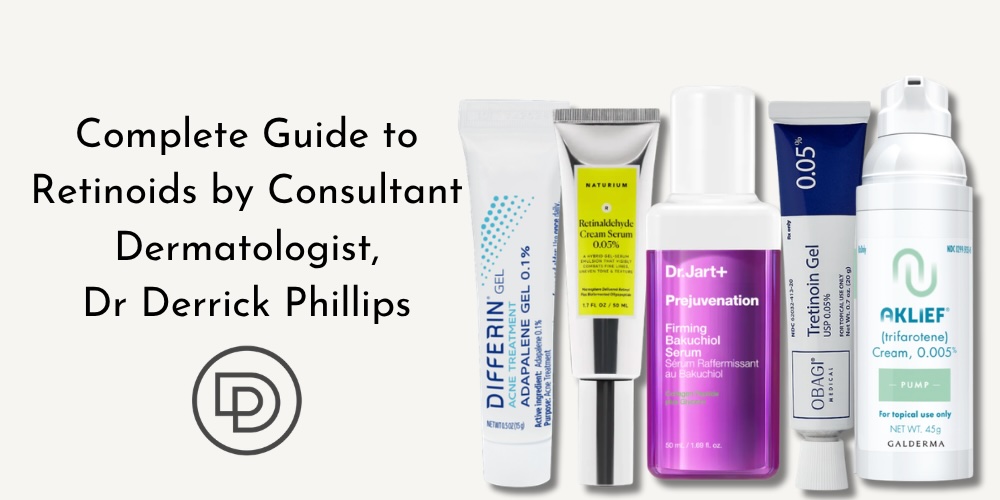
Dr Phillips Pick for Bakuchiol Retinoid: Dr Jart Prejuvenation Firming Bakuchiol Serum
Retinol — The OTC Entry Point
Retinol is the most widely available over-the-counter retinoid and the option most people encounter first. It is not active in its original form — the skin must convert it through two enzymatic steps before it becomes retinoic acid, the compound that actually does the work. This multi-step conversion is what makes retinol gentler and slower-acting than prescription options.
Retinol is a sensible starting point for those new to retinoids, particularly for anti-ageing and mild acne. Beginning at a lower concentration (0.1%-1%) and building up gradually helps minimise the dryness, flaking, and redness that some experience early on.
Dr Phillips Picks for a Starter Retinol: The Ordinary 1% Retinol in Squaline, RoC RETINOL CORREXION® Wrinkle Correct Night Cream or Skinceuticals Retinol 0.3 Face Cream
Dr Phillips is featured in this Beginners Guide to Retinol in SheerLuxe.
Retinaldehyde (Retinal) — Stronger and Often Underrated
Retinaldehyde, commonly referred to as retinal, sits one step closer to retinoic acid than retinol in the conversion process. This makes it more potent and faster-acting than retinol, while still being available without a prescription in the UK.
For patients who want stronger results than retinol can offer but are not yet ready, or do not have access, to a prescription, retinal is frequently an excellent choice. They typically come in 0.05% or 0.1% strengths.
Dr Derrick Phillips considers it one of the most underrated over-the-counter actives in skincare. It is particularly well-suited to photoageing, uneven skin tone, and mild-to-moderate acne.
Dr Phillips Pick for Retinaldehyde: Naturium Retinaldehyde Cream Serum
Adapalene — The Targeted Acne Option
Adapalene is a third-generation synthetic retinoid designed specifically for acne. Unlike retinol, it works directly on retinoic acid receptors without requiring conversion, making it faster-acting and more targeted. It is available at 0.1% over the counter in the UK, sold as Differin. It is photostable, allowing usage during the day and nighttime.
Adapalene is particularly effective for comedonal acne (blackheads and whiteheads) and inflammatory breakouts. It is generally better tolerated than tretinoin and is often Dr Derrick Phillips’ first-choice retinoid for patients whose primary concern is acne.
Dr Phillips Pick for Adapalene: Differin Gel
Trifarotene — Newer, Highly Targeted Option
Trifarotene is a fourth-generation retinoid that selectively targets the retinoic acid receptor most concentrated in the outer layers of the skin. This targeted action makes it particularly well-suited to treating acne on the body, particularly stubborn back acne. It can be too irritating for the face, depending on your sensitivity.
Dr Phillips Pick for Trifarotene: Aklief
If you’re looking for a back or body acne treatment plan that may require a prescription, schedule a consultation with Dr Derrick Phillips in one of his London clinics.
Tretinoin — The Gold Standard for Photoageing
Tretinoin (retinoic acid) is the most potent prescription retinoid and remains the gold standard treatment for fine lines, wrinkles, uneven skin tone, and loss of firmness caused by cumulative sun exposure. Tretinoin is the most studied and has the strongest evidence for results.
Unlike retinol or retinal, tretinoin is already in its active form and requires no conversion by the skin, which is why it acts faster and produces more pronounced results.
Tretinoin is available on prescription only in the UK and requires a consultation with a dermatologist to access. It is also effective for acne, but in clinical practice, adapalene is often better tolerated as a first-line acne treatment for many patients. Typically, patients start at a low dose, like 0.025% and work their way up to 0.1%.
Dr Phillips Pick for Prescription Tretinoin: Obagi and Ketrel
Book a consultation with Dr Derrick Phillips to discuss prescription tretinoin options.
Retinoid Benefits: What Can Retinoids Actually Do?
Regardless of which form of retinoid is used, the core benefits of this family of compounds are well-established in clinical literature:
- Accelerated skin cell turnover, improving texture and reducing dullness
- Stimulation of collagen and elastin production, reducing fine lines and wrinkles
- Reduction of comedones (blocked pores), blackheads, and acne lesions
- Improvement in post-inflammatory hyperpigmentation and uneven skin tone
- Long-term improvement in photoageing, including sun damage and age spots
The strength and speed of these benefits depend on which retinoid is used, at what concentration, and how consistently it is applied over time.
How to Choose the Right Retinoid for Your Skin
The right retinoid depends on your skin concern, your skin’s tolerance, and whether you have access to a prescription.
As a general guide:
- Sensitive skin or first-time retinoid user: Bakuchiol or low-strength retinol (0.025–0.1%)
- Anti-ageing / photoageing as the primary concern: Retinal (OTC) or tretinoin (prescription)
- Mild-to-moderate acne: Adapalene 0.1% (available OTC as Differin)
- Moderate-to-severe acne: Adapalene 0.3% or tretinoin (prescription)
- Acne on the body or trunk: Trifarotene (prescription)
- Unable to tolerate stronger retinoids: Retinol, Retinal or Bakuchiol
A consultation with a dermatologist ensures the right option is chosen for your specific concerns, skin type, and any other conditions being managed.
How to Use Retinoids Without Irritating Your Skin
The “retinoid reaction”, often seen as dryness, flaking, and redness in the early weeks, is normal and temporary, but it can be significantly reduced with the right approach.
- Start low and build gradually. Begin with the lowest effective concentration two to three times per week before moving to nightly use. This allows the skin to acclimatise.
- Apply to dry skin. Applying retinoids to damp skin increases absorption and the likelihood of irritation. Wait 20–30 minutes after cleansing before applying.
- Use the sandwich method if needed. Applying a thin layer of moisturiser before the retinoid reduces irritation without significantly affecting results — a useful technique when starting out.
- Keep the rest of your routine simple. Avoid combining strong actives (AHAs, BHAs, vitamin C) on the same evenings as a retinoid, particularly in the early weeks.
- Sunscreen is non-negotiable. Retinoids increase photosensitivity. Daily broad-spectrum SPF 30 or higher is essential throughout treatment, not just on sunny days.
Dr Phillips talks about product layering in this Dailymail article.
How Long Do Retinoids Take to Work?
Patience is essential. The skin’s cell cycle takes approximately 28 days, and retinoids work by influencing that cycle over time. Most patients should expect:
- 4–6 weeks: Early improvements in skin texture and clarity
- 8–12 weeks: Meaningful changes in fine lines, pigmentation, or acne
- 6 months or more: Optimal results, particularly for photoageing
Stopping too early, or switching products before results have had time to develop, is one of the most common reasons retinoids appear not to work. Consistency over months, not weeks, is what produces lasting change.
Dr Phillips’ Top 5 Tips for Getting the Most out of your Retinoids
Frequently Asked Questions in Clinic
Is retinol the same as tretinoin?
No. Retinol and tretinoin are both retinoids (vitamin A derivatives), but tretinoin is already in its active form and is significantly more potent. Retinol requires two conversion steps in the skin before becoming active, making it gentler and slower-acting. The difference between retinol and tretinoin is effectively the difference between an over-the-counter product and a prescription treatment.
What is the difference between retinoid vs retinol?
Retinoid is the umbrella term for all vitamin A derivatives used in skincare, including retinol, retinal, adapalene, tretinoin, and more. Retinol is one specific retinoid, the most commonly available over-the-counter option. All retinols are retinoids, but not all retinoids are retinol.
What are the retinol benefits for skin?
Consistent retinol use can accelerate cell turnover, stimulate collagen production, reduce acne lesions and comedones, improve post-inflammatory pigmentation, and diminish the visible effects of photoageing including fine lines and sun damage. Results develop gradually over months of consistent use.
Can I use retinoids if I have sensitive skin?
Yes, but choosing a gentle starting point is important. Bakuchiol or a very low-strength retinol used two to three times per week is appropriate for most sensitive skin types. A dermatologist can recommend the best formulation and concentration for your specific skin.
What is retinaldehyde vs retinol — which is better?
Retinaldehyde (retinal) is one step closer to active retinoic acid than retinol, making it more potent and faster-acting while still being available without a prescription. For patients who want stronger results than retinol offers but are not accessing prescription treatments, retinal is often the better choice. It is particularly effective for anti-ageing and pigmentation.
Can retinoids be used during pregnancy?
No, all prescription retinoids are contraindicated in pregnancy. If you’re struggling with acne during pregnancy, try these skincare actives.
What is tretinoin and how do I access it in the UK?
Tretinoin is a prescription-strength retinoid and is considered the gold standard for treating photoageing. In the UK, it requires a prescription from a qualified prescriber. A dermatology consultation ensures it is appropriate for your skin, your concerns, and your overall routine.
Book a consultation in London with Dr Derrick Phillips here.