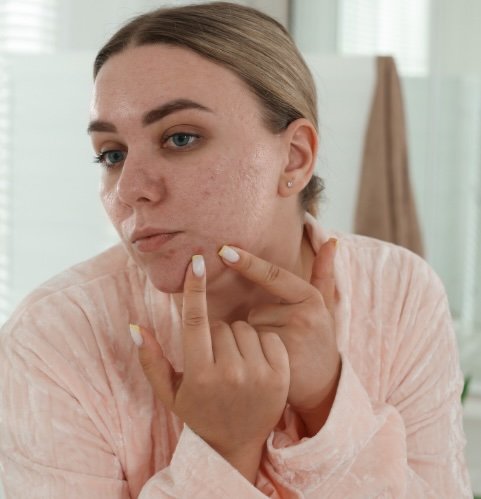
Keratosis pilaris is a common, harmless skin condition caused by a buildup of keratin, a natural skin protein, that blocks hair follicles and creates small, rough bumps on the skin’s surface. It affects up to 40% of adults and is most commonly found on the upper arms, thighs, and buttocks, where it is often described as “chicken skin” or “strawberry legs.”
Keratosis pilaris is one of the most frequent complaints seen in dermatology clinics, particularly among patients frustrated by the fact that standard skincare products make little difference. Most over-the-counter moisturisers do not address the underlying cause: keratin buildup inside the hair follicle.
In this article, consultant dermatologist Dr Derrick Phillips explains what causes keratosis pilaris, how to identify whether strawberry legs or chicken skin on your arms is KP, and the most effective treatments that actually work.
What Is Keratosis Pilaris (KP)?
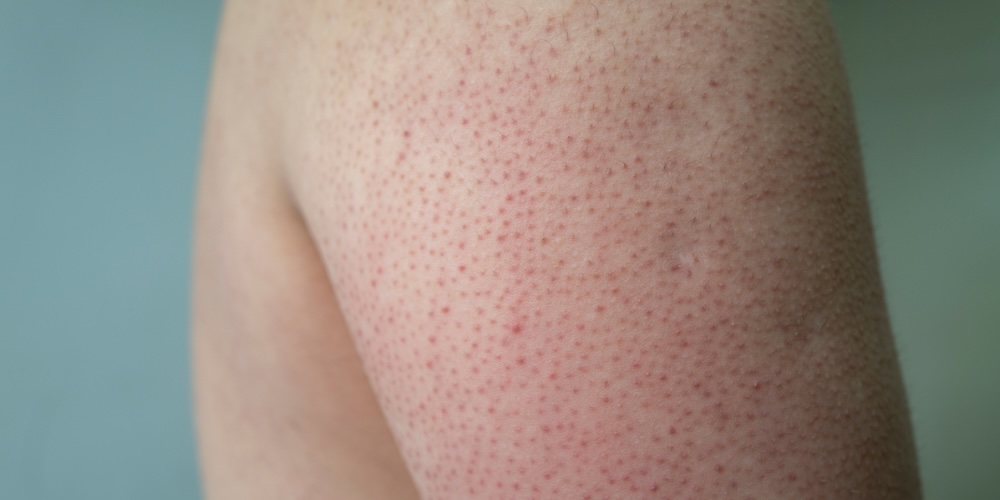
Keratosis pilaris is a chronic skin condition where keratin, a natural skin protein, builds up and blocks hair follicles, creating small, rough bumps.
These bumps:
- Often feel like sandpaper
- Can be skin-colored, red, or brown
- Commonly appear on the arms, thighs, buttocks, and sometimes the face
KP is extremely common, not contagious, and often improves with age.
What Causes Strawberry Legs and Chicken Skin?
Commonly referred to as “chicken skin” on the arms or “strawberry legs”, several factors influence how visible keratosis pilaris is, how often it flares, and why some people are more affected than others.
Genetics
KP tends to run in families. If a parent has it, there is a higher chance their children will too. It is also more common in people who have eczema or ichthyosis, as these conditions share an underlying tendency toward dry, keratin-prone skin.
Dry Skin and Cold Weather
Keratosis pilaris almost always worsens in winter. Lower humidity and central heating strip moisture from the skin, making keratin buildup more pronounced and bumps more visible. Many patients find their KP nearly disappears in summer, only to return when the temperature drops.
Shaving
Shaving can aggravate existing follicle blockages and create additional irritation around the hair follicle. This is one of the main reasons strawberry legs tend to be more noticeable than chicken skin on the arms. The combination of KP and shaving irritation makes the dotted appearance more prominent.
Age
KP is particularly common during adolescence and often improves significantly in adulthood. Hormonal changes during puberty are thought to influence keratin production, which is why many teenagers develop it and find it gradually settles in their twenties and thirties.
Dry or Sensitive Skin Types
People with naturally dry or sensitive skin produce more keratin relative to the skin’s ability to shed it, making them more prone to follicle blockages. This is also why is keratosis pilaris frequently seen alongside other dry skin conditions.
How to Get Rid of Keratosis Pilaris: Step-by-Step Treatment
Treating keratosis pilaris effectively comes down to consistency and using the right ingredients to exfoliate and moisturize. Rather than layering multiple actives at once, a structured approach tends to deliver the best results.
Step 1: Start with Exfoliating
The first step is to help clear the buildup of keratin blocking the hair follicles.
This can be done using:
- A salicylic acid body wash, or
- A glycolic acid treatment
Both ingredients help exfoliate the skin and unclog pores. However, it’s important to use one or the other, not both together, as combining them can lead to irritation and worsen the appearance of KP.
Dr Phillips’ Exfoliating Product Picks: CeraVe SA Smoothing Cleanser and The Ordinary Glycolic Acid Toner
Step 2: Follow with a Urea-Based Moisturiser
After exfoliation, hydration is essential. A urea-based moisturizer helps to:
- Soften keratin buildup
- Smooth rough texture
- Improve overall skin appearance
Urea is particularly effective because it acts as both a hydrator and a mild exfoliant, making it a key part of any KP routine.
Dr Phillips’ Urea Moisturiser Product Picks: La Roche Posay Lipikar Lait Urea 10% Triple-action Hydrating Lotion and Eucerin Urea Repair Plus 10% Cream
Step 3: Add an Over-the-Counter Retinol (If Needed)
If the skin does not improve with exfoliation and moisturising alone, the next step is to introduce an over-the-counter retinol.
Retinol works by:
- Increasing skin cell turnover
- Preventing further follicle blockage
- Gradually improving skin texture
This step should be introduced gradually to minimize irritation.
Get the Beginners Guide to Retinol here.
Step 4: Consider Prescription Treatment
For more persistent or resistant cases, a dermatologist may recommend a prescription-strength retinoid.
These treatments are more potent and can deliver more noticeable results, but should be used under medical supervision to ensure they are appropriate for your skin.
What Makes KP Worse?
Keratosis pilaris can fluctuate over time, and certain factors are known to make the condition more noticeable or persistent. Understanding these triggers can help you better manage symptoms and avoid unnecessary irritation.
One of the most common contributors is dry skin. When the skin lacks moisture, keratin buildup becomes more pronounced, leading to a rougher texture and more visible bumps. This is why KP often worsens during colder months or in low-humidity environments.
Harsh skincare routines can also aggravate the condition. Over-exfoliating, using abrasive scrubs, or layering multiple active ingredients—particularly acids—can irritate the skin barrier and make bumps appear more inflamed.
Hair removal methods, such as shaving or waxing, may further exacerbate KP. These can lead to irritation or ingrown hairs, which can make the skin look more uneven and contribute to the appearance of “strawberry legs.”
Inconsistent skincare is another factor. Keratosis pilaris responds best to regular, ongoing care, and symptoms often return when treatment is stopped or used sporadically.
Finally, hot showers and harsh soaps can strip the skin of its natural oils, worsening dryness and making KP more noticeable over time.
Is Keratosis Pilaris Permanent?
Keratosis pilaris is a long-term condition, but it is not permanent in the same way as scarring.
For many people:
- It improves with age
- It fluctuates with seasons (often worse in winter)
- It responds well to consistent skincare
However, symptoms may return if treatment is stopped.
Common Questions We Answer in Clinic about Keratosis Pilaris
Is keratosis pilaris the same as strawberry legs?
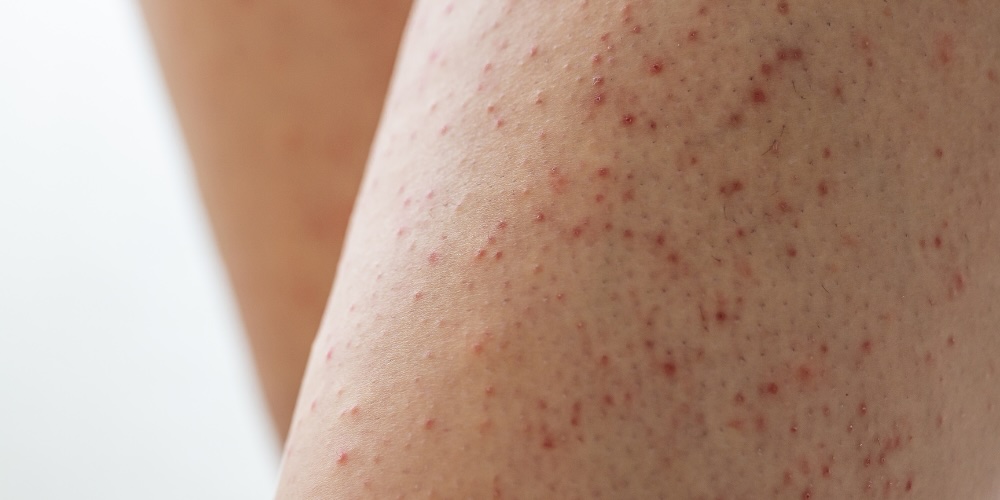
Strawberry legs and chicken skin are common names for keratosis pilaris, a condition where keratin buildup blocks hair follicles and creates small, dark dots or rough bumps. While the terms are often used interchangeably, strawberry legs can occasionally refer to enlarged pores or folliculitis.
Does keratosis pilaris go away on its own?
Keratosis pilaris often improves with age, particularly after adolescence, but it rarely resolves completely without treatment. Many people find symptoms fluctuate with the seasons, worsening in winter when skin is drier. Consistent use of exfoliating and moisturising products helps manage it effectively.
How long does keratosis pilaris take to clear?
Most people see noticeable improvement after four to six weeks of consistent treatment using a chemical exfoliant and a urea-based moisturiser. KP does not clear overnight — results depend on daily routine adherence rather than the strength of any single product.
Can you get keratosis pilaris on your legs?
Yes. KP commonly affects the upper arms, thighs, and buttocks, and on the legs it can be more noticeable due to larger hair follicles and the effects of shaving. This is what creates the dotted appearance people describe as strawberry skin or strawberry legs.
Is keratosis pilaris made worse by shaving?
Shaving can irritate hair follicles and worsen the appearance of KP on the legs. Using a gentle shaving technique, avoiding dry shaving, and applying a urea-based moisturiser afterwards helps reduce irritation and keeps bumps less visible.
When should you see a dermatologist for keratosis pilaris?
If KP has not improved after eight to twelve weeks of consistent over-the-counter treatment, or if the bumps are inflamed, itchy, or spreading, a dermatologist can assess whether a prescription retinoid or other treatment is appropriate.