What causes acne?
Acne develops when excess oil, dead skin cells and bacteria combine to block the hair follicle, triggering inflammation. It exists on a spectrum, from occasional breakouts to persistent, scarring disease, and the underlying drivers differ from patient to patient. This is why our two acne clinics in London treat the cause, not just the breakout in front of them, gets better long-term results.
What Dr Phillips treats in his acne clinics
Inflammatory acne Papules, pustules and deeper nodules and cysts
Comedonal acne Blackheads and whiteheads
Teenage acne Hormonal pattern acne, treated early to reduce the risk of scarring
Teenage acne has its own pattern and its own pressures. It usually starts at puberty as rising hormone levels increase oil production, typically showing first across the forehead, nose and chin (the "T-zone") before spreading. It's extremely common, but common doesn't mean it should be left untreated: early, effective treatment reduces both the physical risk of scarring and the impact acne can have on confidence at an age when that matters enormously.
Dr Phillips's approach with teenage patients focuses on starting with the right treatment early rather than waiting to see if it resolves on its own, alongside practical, sustainable skincare guidance that fits a teenager's routine.
For persistent and severe teenage acne, Dr Phillips may suggest a prescription treatment plan, such as antibiotics or Roaccutane.
For a starting point on everyday skincare alongside any prescribed treatment, see his teenage skincare routine guide.
Take control of teenage acne
If your acne persists beyond topical treatment, schedule a consultation with Dr Derrick Phillips for a customised treatment plan to take control of your teenage acne.
Hormonal and adult acne Jawline and lower-face patterns with painful cysts
Acne that appears or worsens in the late twenties, thirties and beyond, often affecting the jawline, chin and lower face, is commonly driven by increased sensitivity of the sebaceous glands and hair follicles to androgen hormones. In some women, hormonal conditions such as polycystic ovary syndrome (PCOS) or the hormonal changes of perimenopause may also be associated with elevated androgen levels, further contributing to acne. Understanding the underlying cause is important, as hormonal acne often requires a different treatment approach to teenage acne.
Hormonal acne is often characterised by deeper, tender inflammatory spots rather than superficial blemishes. Because it frequently develops in adulthood and affects visible areas such as the jawline and lower face, it can have a significant impact on confidence and quality of life.
Dr Phillips assesses whether a hormonal driver is likely based on the pattern, timing and your history, and where appropriate, discusses hormonal treatment options, such as prescription spironolactone, alongside topical therapy.
This is also an area Dr Phillips has researched directly: he specialises in adult female acne and has been involved in a national clinical trial investigating hormonal acne treatment, work that informs how he assesses and treats hormonal acne in clinic today.
Take control of hormonal acne
Living with painful, hormonal acne shouldn't be your normal. Book a consultation with Dr Phillips to take control of your hormonal acne.
Acne during pregnancy Safe, stage-appropriate treatment
Although acne is not a common feature of pregnancy, hormonal changes can sometimes trigger new acne or cause existing acne to worsen. Treatment requires careful consideration, as many commonly used acne medications, including isotretinoin, topical and oral retinoids, and certain oral antibiotics, are not suitable during pregnancy or breastfeeding.
This makes a dermatologist-led assessment particularly important rather than optional. Dr Phillips reviews what's safe at each stage, from pregnancy, breastfeeding, or if you're trying to conceive, and builds a plan around pregnancy-safe options such as azelaic acid, certain topical antibiotics, and skincare adjustments, while flagging anything in your current routine that needs to change. If you're already on treatment such as isotretinoin and are planning a pregnancy, this should be discussed with Dr Phillips well in advance, given the strict timing requirements around stopping the medication.
Find the right acne treatment during pregnancy
Acne can still be treated during pregnancy, but treatment options need to be chosen carefully. Book a consultation with Dr Phillips to discuss a safe and appropriate treatment plan.
Body and back acne Treatment for stubborn acne on back, chest and body
Acne isn't confined to the face — the chest, back and shoulders carry the same oil glands and follicles, and breakouts there respond to the same hormonal and inflammatory drivers. Back acne, often called "bacne," tends to be overlooked or self-managed with body washes long after it would have prompted a dermatology visit if it were on the face, but it carries the same risk of scarring, particularly across the back, where skin is thicker.
Topical treatment is often harder to apply consistently over a larger area, and clothing, sweat and friction can all aggravate body acne in ways facial acne isn't exposed to.
Dr Phillips assesses body and back acne with the same rigour as facial acne, considering severity, scarring risk and any hormonal driver, and treatment may include medicated washes, topical or oral therapy, or isotretinoin where the acne is severe or scarring.
For a practical starting point, see his back acne treatment guide.
Take control of hormonal acne
Living with painful, hormonal acne shouldn't be your normal. Book a consultation with Dr Phillips to take control of your hormonal acne.
Fungal acne (Malassezia Folliculitis) Correctly diagnosed and distinguished from true acne
What's commonly called "fungal acne" isn't acne at all. It's a yeast-driven condition called Malassezia (pityrosporum) folliculitis, and the distinction matters because treating it with standard acne products usually makes it worse. It tends to present as small, uniform, itchy bumps, often across the chest, back, jawline and hairline, and frequently flares with heat, sweat, occlusive skincare or after a course of antibiotics.
Malassezia folliculitis is a distinct condition that can resemble acne but requires a different treatment approach. Careful assessment of the appearance and distribution of the lesions usually allows the diagnosis to be made. Treatment typically involves antifungal therapies rather than conventional acne medications.
Could your breakouts be fungal acne?
If you’re experiencing acne that isn’t improving with standard acne treatment plans, you may have fungal acne. Book a consultation with Dr Derrick Phillips to properly diagnose and treat your acne.
Acne scarring and post-acne marks Advanced treatments to eliminate scarring and hyperpigmentationÂ
Acne scarring is one of the main reasons early, effective treatment matters: the longer active acne goes uncontrolled, the greater the risk of permanent textural change and hyperpigmentation.
Treatment for acne scarring is usually deferred until active acne has been brought under control. This helps ensure the best possible outcome and reduces the risk of new breakouts leading to further scarring during treatment.
Dr Phillips is a provider of advanced scarring and pigmentation treatments, like laser and light. Dr Phillips offers the following for acne scars and marks:
Atrophic (indented) scarring
Typically addressed with CO₂ laser resurfacing or UltraClear® laser resurfacing, which stimulate new collagen to soften depth and texture over a course of sessions.
Post-inflammatory erythema and hyperpigmentation ​
Post-inflammatory erythema (red or pink marks) —often addressed with the Lutronic Derma V, and post-inflammatory hyperpigmentation (brown marks) — where laser is appropriate, the PicoWay and Nd:YAG lasers are often preferred in skin of colour — though most cases fade with the right topical regimen and time.
Acne and skin of colour ​
Where hyperpigmentation requires laser treatment rather than topical management, the PicoWay laser and Nd:YAG laser are often the preferred option in skin of colour, given the lower risk of further pigment change compared with other lasers.
Considering treatment for acne scars or post-inflammatory pigmentation?
Book a consultation with Dr Derrick Phillips to discuss the treatment options most appropriate for your skin and the type of scarring you have.
Acne in skin of colour
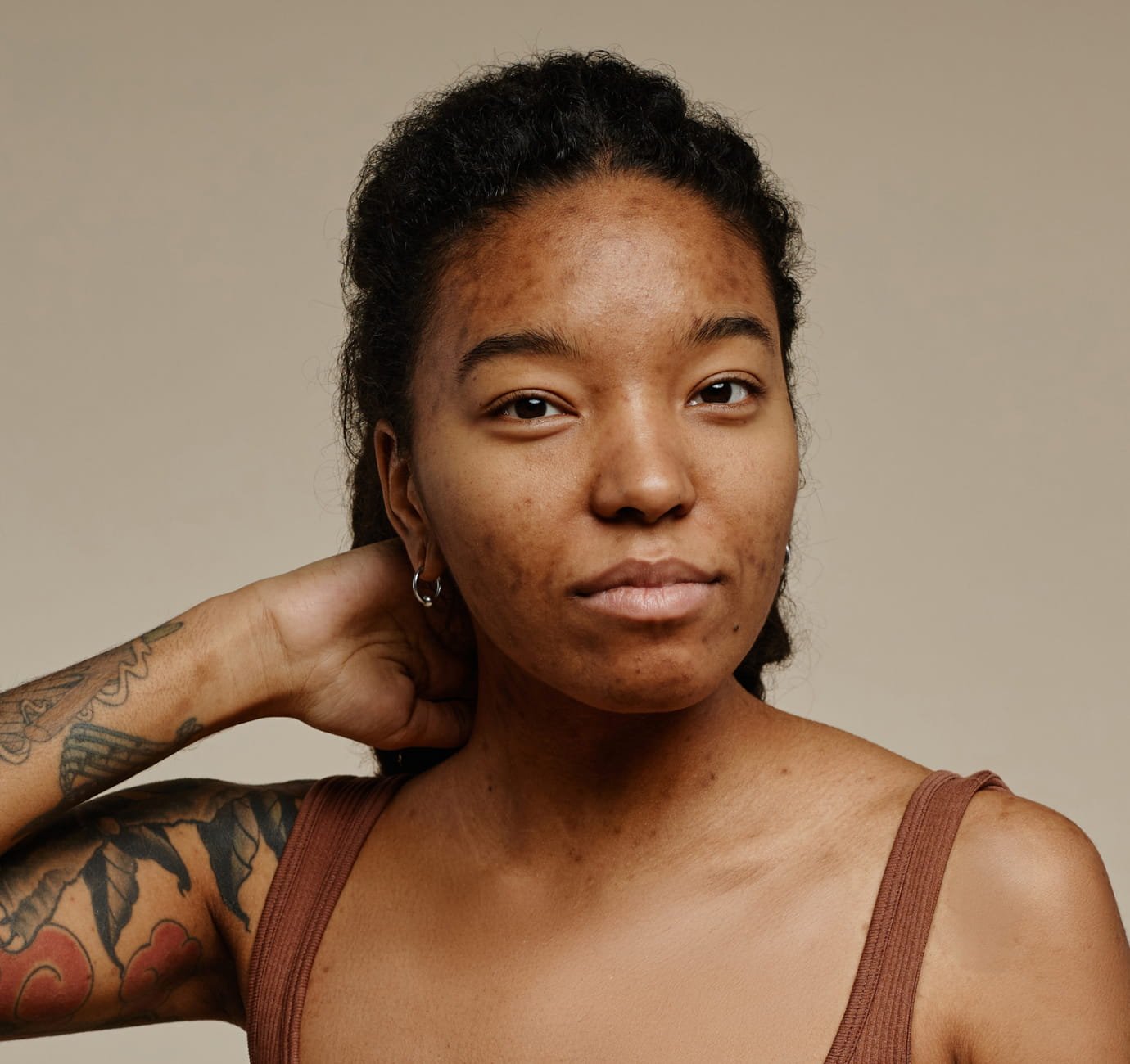
In darker skin tones, acne often leaves behind post-inflammatory hyperpigmentation, with dark marks that can persist long after the acne has resolved. Dr Phillips combines extensive clinical experience with a personal understanding of the impact acne can have, tailoring treatment to control active disease while minimising the risk of pigmentation.
The goal is to clear acne while actively minimising pigmentation risk, using treatment choices, medication selection and laser settings that account for skin tone from the outset, rather than applying a generic protocol and dealing with marks afterwards.
Book a consultation with Dr Derrick Phillips to discuss a personalised treatment plan for acne and post-inflammatory hyperpigmentation in darker skin tones.
How Dr Phillips treats acne
Treatment is tailored to the type and severity of your acne. Treatment plans are highly individualised and often combine several approaches. Many patients begin with both topical and oral treatments, with the regimen reviewed and adjusted over time according to their clinical response and treatment goals.
Topical therapies
Retinoids, benzoyl peroxide, antibiotics and other prescription creams, used alone or in combination depending on the type of acne.
Oral antibiotics
For inflammatory acne, prescribed as part of a time-limited treatment plan alongside topical therapy.
Hormonal treatments
Including therapies such as spironolactone for women with hormonally driven acne where appropriate.
Isotretinoin / Roaccutane
For severe, persistent or scarring acne.
Read more
For acne that is severe, scarring, or has not responded adequately to other treatments, Dr Phillips prescribes and manages isotretinoin / Roaccutane treatment. It remains the most effective treatment available for persistent or scarring acne, with the potential for long-term clearance.
Isotretinoin requires careful patient selection, dosing, monitoring and counselling throughout treatment. Dr Phillips personally oversees every stage of treatment, providing regular follow-up to monitor progress, adjust the dose where appropriate and ensure the treatment is used safely and effectively.
If you’re dealing with persistent and severe acne, book a consultation to learn more about prescription treatment options.Â
Laser and light treatments
Including the AviClear® laser for active acne, and CO₂ or UltraClear® laser resurfacing for established scarring.
Read more
For active acne that hasn’t responded well to topical or oral treatment, or for patients who would prefer not to take long-term medication, laser treatment offers another route. Dr Phillips offers the AviClear® laser, the first FDA-approved laser designed specifically to treat acne. Rather than working on the surface, it targets the sebaceous (oil) glands directly, calming the overactivity that drives breakouts at the source.
A course is typically three sessions, spaced around a month apart, and results continue to build for several months afterwards as oil production settles. It’s suitable across a wide range of skin tones, which makes it a genuine option for patients in whom other acne lasers would carry more risk.
Laser is not positioned as a replacement for medical treatment in every case — for many patients it works alongside topical or oral therapy, and for others it offers a route to clearer skin without daily tablets. Which applies to you is assessed at consultation, alongside your acne type, severity and treatment history.
What to expect from your consultation
Your consultation begins with a comprehensive assessment of your skin and medical history. Dr Phillips will explain the likely cause of your acne, discuss realistic expectations, including the expected timescale for improvement, and develop a personalised treatment plan. Regular follow-up appointments allow your progress to be reviewed and treatment adjusted as your skin responds, ensuring the plan continues to meet your needs throughout the course of treatment.
Comprehensive assessment
Dr Phillips will assess your skin, medical history and the type and severity of your acne to understand the underlying causes.
Diagnosis and discussion
You'll receive a clear explanation of your acne, what may be contributing to it, and realistic expectations for treatment and results.​
Personalised treatment plan
A tailored treatment plan will be recommended based on your skin, which may include topical treatments, oral medication, hormonal therapy or laser treatment where appropriate.
Ongoing review and follow-up
Your progress will be monitored through follow-up appointments, with treatment adjusted as your skin responds. Most acne treatments take around 8–12 weeks to show their full effect.
Why choose Dr Derrick Phillips for acne treatment in London
Acne is more than a cosmetic concern and should be approached as a medical condition. Dr Derrick Phillips provides comprehensive, consultant-led care, treating active acne, helping to prevent scarring and, where appropriate, improving acne scars and post-inflammatory pigmentation using advanced laser and light therapies. Treatment is delivered as part of a personalised plan that evolves as your skin responds.
With 12 years' experience in the NHS, including as a Consultant Dermatologist at Imperial College Healthcare NHS Trust, Dr Phillips has extensive experience managing the full spectrum of acne. He has a particular interest in adult female acne and has contributed to research in the field, including a national clinical trial investigating hormonal acne. He also held an honorary appointment as a Clinical Teacher at Imperial College London and served as Undergraduate Lead for medical students at St Mary's Hospital, helping to train the next generation of doctors.

As an acne dermatologist, Dr Phillips's approach is built on:
Acne is highly treatable with the right, individualised plan.
Treatment options span topical, hormonal, oral, isotretinoin and in-clinic laser care.
Early treatment reduces the risk of permanent scarring and dark marks.
Acne scars and hyperpigmentation are assessed and treated as part of a comprehensive, long-term management plan.
Hormonal acne needs a different approach to teenage acne, and responds well once the driver is identified.
AviClear® laser offers a non-pharmaceutical treatment option for selected patients with active acne.
Care covers the full arc — treating active acne and correcting the scarring or marks it leaves behind.
FAQs
When should I see a dermatologist about acne?
If acne is painful, leaving scars or dark marks, or affecting your confidence, it’s worth seeing a dermatologist. Prescription treatments and specialist therapies can achieve results beyond what’s possible with over-the-counter products alone.
Can acne be cured?
Acne can usually be very well controlled, and many treatments — particularly isotretinoin — produce long-lasting improvement. The right approach depends on the type and severity, assessed at consultation.
Is my acne hormonal?
Acne that appears along the jawline and lower face in adulthood, or that flares around the menstrual cycle, often has a hormonal component. This is assessed at consultation, and treatment may include hormonal therapy alongside topical or oral options.
Will treatment help acne scars and dark marks?
Alongside treating active acne, Dr Phillips offers a range of treatments for established acne scarring and post-inflammatory hyperpigmentation, including fractional CO₂ and UltraClear® laser resurfacing where appropriate.
Is acne treatment safe for darker skin tones?
Yes. Dr Phillips has extensive experience treating acne across diverse skin tones. In darker skin, treatment is planned not only to control active acne but also to minimise the risk of post-inflammatory hyperpigmentation from the outset.
Can acne be treated with lasers instead of medication?
For some patients, yes. The AviClear® laser targets the oil glands that drive acne and is suitable across a wide range of skin tones. It isn’t right for every type or severity of acne, so this is assessed at consultation alongside topical, hormonal and oral options.
Do I have to take strong medication, like isotretinoin?
Not necessarily. Treatment is tailored to the type and severity of your acne. Many patients respond well to topical treatments, while others benefit from oral antibiotics, hormonal treatments, or isotretinoin when clinically appropriate — this is determined at consultation, not assumed in advance.
Explore knowledge base
Learn more about acne, treatment options and skin health through Dr Derrick Phillips' expert videos and articles. Browse practical guidance and trusted information to help you better understand your skin.
