
Decades ago, facial toners served a specific purpose: traditional alkaline soaps could strip the skin and disrupt its naturally slightly acidic pH, so toner helped bring it back into balance. Modern cleansers are generally formulated with the skin’s pH in mind, which means that original role is largely redundant.
That doesn’t mean toner has no place in a routine. Today, it’s better thought of as an optional way to deliver specific active ingredients to your skin, such as hydrating humectants, niacinamide for oiliness and pigmentation, or exfoliating acids for acne and dullness.
Rather than asking, “Do I need a face toner?”, ask what it’s actually adding to your routine that a good cleanser, moisturiser and sunscreen aren’t already providing. Those basics matter far more than adding another step simply because you feel you should.
Why did toner become a skincare step in the first place?
Toners became popular at a time when facial cleansing often relied on alkaline soaps, which could temporarily raise the skin’s surface pH and leave it feeling tight or dry. Traditional toners were used after cleansing to remove residual cleanser and help restore the skin to its naturally acidic state.
Healthy skin is mildly acidic, typically with a surface pH of around 4.5–5.5. This acidity forms part of the skin’s “acid mantle”, a protective film made up of sweat, sebum and components of the outermost skin layer. It helps support normal barrier function and the skin microbiome.
Skin hydration facts:
- Skin with a surface pH below 5 has been associated with better barrier function and hydration than more alkaline skin.
- After the skin’s pH is temporarily altered by cleansing or skincare products, it gradually returns towards its normal acidic range.
- Modern facial cleansers are often formulated at a mildly acidic or near-skin-neutral pH, so a separate toner is no longer necessary simply to “rebalance” the skin after cleansing.
Older alkaline soaps could disrupt this balance more significantly, which helps explain why toner historically became part of the traditional cleanse-tone-moisturise routine.
Do you actually need toner with a modern cleanser?
For most people, no. Modern facial cleansers are generally much gentler than traditional alkaline soaps and are often formulated to work closer to the skin’s natural pH. If your cleanser is already well formulated and does not leave your skin feeling tight, dry or irritated, there is usually no need for a toner simply to “rebalance” the skin afterwards.
This means that toner’s original role is largely redundant for many people using a modern cleanser.
The practical test: if your cleanser is designed for the face, labelled as pH-balanced or suitable for sensitive skin, and leaves your skin comfortable after washing, a toner is unlikely to be adding much from a pH-balancing perspective.
Dr Phillips outlines the best pharmacy cleansers here.
When is toner actually worth adding to a routine?
When it’s delivering an active ingredient you specifically want. Modern facial toners are really a delivery format: a thin liquid applied after cleansing, before moisturiser. Whether it’s worth it depends entirely on what’s in the bottle.
| Toner type | What it does | Best for |
|---|---|---|
| Hydrating toner | Delivers humectants (glycerin, hyaluronic acid) for a moisture boost before moisturiser | Dry or dehydrated skin |
| Niacinamide toner | Reduces oiliness and pigmentation over time | Oily skin, uneven tone |
| Exfoliating toner (salicylic/glycolic acid) | Chemical exfoliation for acne and dullness | Acne-prone or dull, congested skin |
Hydrating toners
These layer humectants onto slightly damp skin to boost water content before moisturiser locks it in. They’re the lowest-risk category and mostly a nice-to-have rather than a strong clinical intervention, useful for very dry or dehydrated skin as an extra hydration layer.
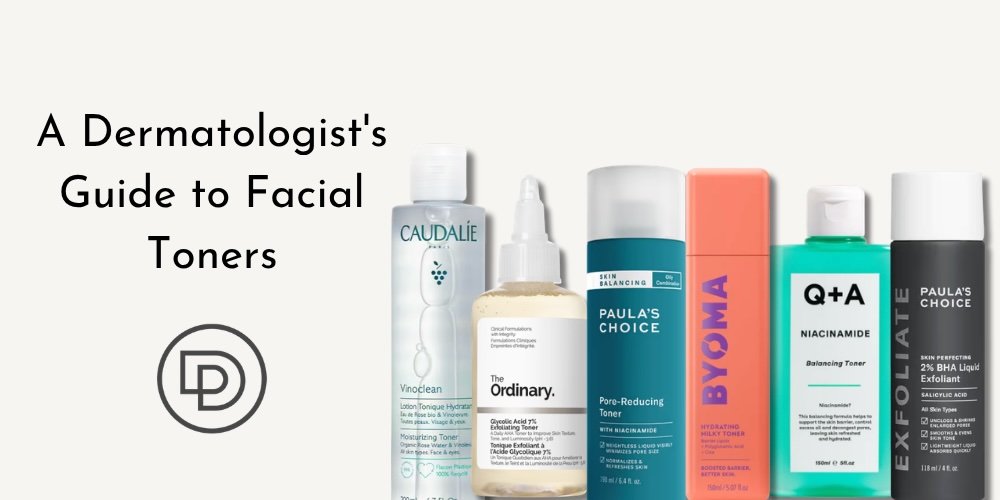
Dr Phillips recommends these hydrating facial toners: Byoma Milky Toner and Caudalie Vinoclean
Dr Phillips talks more about Milky Toners in this Who What Wear article.
Niacinamide Toners
Niacinamide is one of the more useful ingredients you may find in a toner, particularly if your concerns are pigmentation or oily skin. Unlike toner itself, niacinamide has a meaningful evidence base as an active ingredient.
- Studies using around 2% niacinamide have shown reductions in sebum production and clinical oiliness over several weeks, although the evidence for oil control is less extensive than the evidence for pigmentation.
- In the landmark Hakozaki et al. study published in the British Journal of Dermatology, niacinamide reduced melanosome transfer, the process by which pigment is transferred into surrounding skin cells, by 35–68% in laboratory models. Clinical use was also associated with visible improvement in hyperpigmentation after four weeks.
- A separate 12-week study using 5% topical niacinamide found a measurable reduction in the appearance of hyperpigmented spots in ageing facial skin.
The practical takeaway: if you are using a toner because it contains niacinamide, the benefit is coming from the niacinamide rather than from the fact that the product is a toner. You could achieve a similar benefit from a well-formulated niacinamide serum or moisturiser.
Dr Phillips recommends these niacinamide facial toners: Paulas Choice Skin Balancing Toner and Q+A Niacinamide Toner
Exfoliating toners (salicylic acid, glycolic acid)
Exfoliating toners can be useful because they contain active ingredients that chemically exfoliate the skin.
Salicylic acid is particularly helpful for oily, congested and acne-prone skin because it is oil-soluble and can penetrate into the pore, helping to reduce blackheads and blocked pores. Glycolic acid works more superficially to remove dead skin cells and can improve skin texture, brightness and uneven pigmentation.
These are active treatments rather than neutral additions to a routine, so overuse can cause irritation, dryness and disruption of the skin barrier, particularly if they are combined with retinoids or other exfoliating products.
The practical takeaway: exfoliating toners can have a genuine role in a skincare routine, but the benefit comes from the salicylic or glycolic acid rather than the toner format itself. Choose one based on your skin concern and avoid layering multiple exfoliating actives unnecessarily.
Dr Phillips recommends these exfoliating facial toners: Paulas Choice BHA Toner and The Ordinary Glycolic Acid Toner
What should I actually prioritise in my skincare routine?
A good cleanser, moisturiser and daily sunscreen should form the foundation of your skincare routine before adding toner or other extras. These three steps do more for overall skin health than most additional products, and toner should be viewed as optional rather than essential.
- Cleanser removes dirt, excess oil, sunscreen and product build-up without unnecessarily disrupting the skin barrier.
- Moisturiser supports the skin barrier and helps reduce water loss.
- Daily sunscreen protects against UV damage, which is a major driver of premature skin ageing and pigmentation.
At its best, toner is simply another way of delivering a useful active ingredient, such as niacinamide, an exfoliating acid or a humectant, on top of that basic routine.
Protecting your skin barrier should remain one of the most important considerations whenever you introduce new products.
Find more skincare routines for:
Frequently Asked Questions in Clinic
Is toner a waste of money?
Not necessarily, but a plain hydrating or “balancing” toner with no meaningful active ingredient may not add much beyond what a good moisturiser already provides. A toner containing an evidence-based active such as niacinamide, salicylic acid or glycolic acid can be useful, but the benefit comes from the active ingredient rather than the toner format itself.
What order should I apply toner in my routine?
Toner is generally applied after cleansing and before serums and moisturiser. Whether it is applied to damp or dry skin depends on the formulation. Exfoliating acid toners are often used in the evening and should be introduced gradually, with daily sunscreen used as part of the routine.
Can toner replace a cleanser?
No. Toner is not designed to remove makeup, sunscreen, excess oil and daily build-up as effectively as a cleanser. If you choose to use one, it should come after cleansing rather than replace it.
Do I need toner if I have sensitive skin?
Not necessarily. Fragrance, alcohol and exfoliating acids can all irritate sensitive or reactive skin. If your skin is easily irritated, a simple gentle cleanser and barrier-supporting moisturiser are usually a better starting point, with additional products introduced only if they serve a clear purpose.
Is glycolic acid or salicylic acid toner better?
It depends on your skin concern. Salicylic acid is oil-soluble and can penetrate into pores, making it particularly useful for oily, congested and acne-prone skin. Glycolic acid works more at the skin surface and can help improve dullness, uneven texture and pigmentation. Both can cause irritation if overused, so they should be introduced gradually and chosen according to your skin type and the other active ingredients in your routine.
Author: Dr Derrick Phillips, Consultant Dermatologist, MBBS BSc (HONS) FRCP (Dermatology)
Last reviewed: September 2026