
Keloid scars are one of the most challenging skin conditions to treat, not because effective treatments don’t exist, but because no single treatment works best in isolation. As a Consultant Dermatologist providing keloid scar treatment in London, Dr Derrick Phillips approaches keloid scar management the same way he approaches every complex skin condition: with an accurate assessment of the scar’s characteristics first, and a customised treatment plan second.
Dr Phillips discusses the five best treatments for keloid scars, how they work, when each is appropriate, and why combination therapy consistently outperforms a singular approach to treatment.
What is a keloid scar?
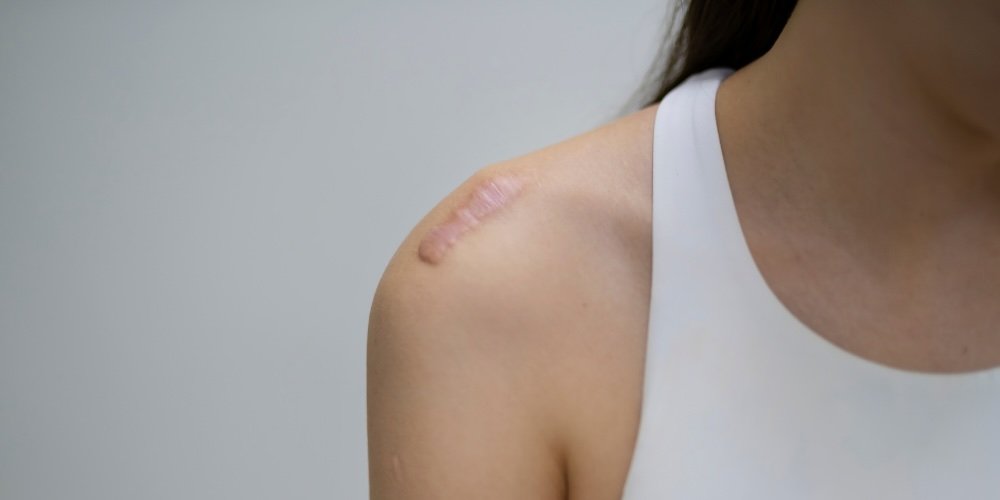
A keloid is a type of raised, overgrown scar that extends beyond the boundary of the original wound. Unlike hypertrophic scars, which also rise above the skin but stay within the wound margins, keloids grow into surrounding healthy skin and continue to expand over time. They can develop after any skin injury: acne, piercings, surgery, burns, vaccination sites, or even minor cuts, and they can appear months or years after the original injury.
Keloids are more common in darker skin tones, affect men and women equally, and have a strong genetic component. They are not medically dangerous, but they can be itchy, painful, tender to the touch, and a significant cosmetic concern depending on their size and location. Keloids on the chest, shoulders, earlobes and jawline are among the most common presentations seen in clinic.
Keloid formation is driven by an overactive wound-healing response: fibroblast cells produce excess collagen, and the blood vessels supplying the scar proliferate beyond what normal healing requires. This is why the most effective treatments target one or both of these mechanisms, and why targeting just one rarely produces lasting results.
The 5 Best Keloid Scar Treatments from a Dermatologist
1. Intralesional steroid injections
Steroid injections are the cornerstone of keloid treatment, and the starting point for almost every management plan. Triamcinolone acetonide is injected directly into the keloid, where it suppresses the fibroblast activity driving excess collagen production and reduces the inflammation sustaining the scar’s growth. Over a course of injections spaced 4–6 weeks apart, most keloids flatten, soften and reduce in redness.
Results depend on the scar’s age, size, and location. Fresh, actively growing keloids tend to respond better than large, longstanding ones. Steroid injections alone are sufficient for many small or early keloids, but for larger or resistant scars, they work best as part of a combination plan.
Side effects to be aware of include skin thinning and hypopigmentation at the injection site, a particular concern in darker skin tones where pigment changes are more pronounced. Dr Phillips manages injection depth and dose carefully to minimise this risk.
Steroid injections alone may not be enough for your keloid. Book a consultation to find out whether they are appropriate as a standalone treatment or as part of a combination plan.
2. 5-fluorouracil (5-FU) injections
5-fluorouracil is a chemotherapy agent that, at low doses injected directly into a keloid, suppresses fibroblast proliferation through a different mechanism to steroids, which is precisely why combining the two is more effective than either alone. The combination of 5-FU and triamcinolone produces greater flattening and a lower recurrence rate than steroid injections alone in clinical evidence, and is a well-established approach in keloid management.
The practical limitation in the UK is sourcing — 5-FU is not routinely stocked in the same way as triamcinolone and may need to be sourced specifically. Dr Phillips can advise on availability and whether 5-FU combination treatment is appropriate and accessible for your case.
Keloid not responding to steroid injections alone? Book a consultation to see if adding 5-FU to the plan may produce significantly better outcomes.
3. Laser Treatment
Laser is one of the most versatile tools in keloid management, and the right laser depends on which aspect of the scar is being targeted:
For vascular redness and blood vessel proliferation, the Lutronic Derma V is recommended.
The Derma V is a vascular laser that targets the excess blood supply feeding the keloid. Red, angry-looking keloids with prominent vascularity respond well to vascular laser treatment, which reduces redness, decreases the scar’s activity, and can reduce the itch and tenderness that active keloids cause. It works particularly well alongside intralesional treatment, reducing the vascular component while steroids address the collagen component simultaneously.
For collagen remodelling, flattening and texture improvement — UltraClear laser or UltraPulse CO₂ laser is recommended.
Fractional ablative lasers — the UltraClear and UltraPulse Fractional CO₂ laser — target the collagen within the keloid itself, stimulating controlled remodelling that progressively flattens and softens the scar. They are particularly useful for raised, textured keloids where the goal is improving the surface profile alongside reducing bulk.
Important: ablative laser on a keloid always carries a theoretical risk of stimulating further keloid formation in susceptible patients, because any skin injury can trigger the same overactive response that caused the original keloid. This is why Dr Phillips uses ablative laser for keloids only in specific cases, at appropriate settings, and always in combination with intralesional treatment to suppress the fibroblast response during the healing period.
Laser choice also depends on skin tone. Vascular lasers and ablative lasers both require careful parameter selection in darker skin to avoid post-inflammatory hyperpigmentation. Dr Phillips’s expertise in treating skin of colour is directly relevant here.
Keloid that is still raised, red or textured despite injection treatment? Book a consultation as laser may be the missing component in your plan.
4. Surgical removal
Surgical excision removes the keloid physically and is appropriate in select cases, particularly for large keloids where other treatments have failed to produce meaningful improvement, or where the scar’s size or location makes injection treatment difficult to deliver effectively.
The significant caveat with surgery for keloids is the risk of a new, potentially larger keloid forming at the surgical site, because the incision itself is a skin injury, and a patient who forms keloids is at risk of forming one at any new wound. This risk varies with the patient’s individual keloid-forming tendency, the location of the surgery and the surgical technique used.
For this reason, surgical excision for keloids is almost never performed alone. Surgery is combined with post-operative intralesional steroid injections started early in the healing period, and sometimes with post-operative vascular or ablative laser treatment, to suppress the risk of recurrence. In high-risk cases or keloids in particularly challenging locations (sternum, shoulders), radiotherapy may be added as an adjunct to reduce recurrence.
Dr Phillips assesses surgical candidacy carefully, as surgery is not appropriate for all patients with keloids and the decision is based on scar characteristics, patient history, and the risk-benefit balance of the combined post-operative plan.
Have a keloid that hasn’t responded to non-surgical treatment? Book a consultation to discuss whether surgical excision with a combined post-operative plan is appropriate for your scar.
5. Combination Treatment
Combination therapy is Dr Phillips’s most frequently recommended approach for moderate-to-severe keloids, and the treatment with the strongest evidence base for durable results. No single treatment addresses all the mechanisms driving a keloid simultaneously: steroids reduce fibroblast activity; vascular laser reduces redness; surgery removes bulk but risks recurrence without adjunctive suppression.
A typical combination plan for a moderate-to-severe keloid might include:
- Intralesional triamcinolone + 5-FU — to suppress fibroblast activity and collagen production from the outset
- Vascular laser (Derma V) — to reduce the blood supply feeding the scar and its symptoms
- Ablative laser (UltraClear or CO₂) — where texture and height improvement is the goal, after the vascular component is controlled
- Surgical excision — in select cases, followed immediately by intralesional treatment and, in high-risk patients, radiotherapy
The sequence matters as much as the components, starting with the intralesional treatment to reduce active growth before adding laser, and ensuring ablative interventions are protected by adequate steroid cover, produces more consistent outcomes than using each treatment in isolation and rotating through them when one fails.
Not sure what combination is right for your keloid? Book a consultation so Dr Phillips can map out a full planbased on your scar’s characteristics and history.
Keloids in Skin of Colour
Keloids occur more frequently in darker skin tones, and treatment in patients with skin of colour requires specific expertise. Recognising and managing the heightened risk of post-inflammatory hyperpigmentation from both laser treatment and injection site reactions is important, along with calibrating laser parameters appropriately for melanin-rich skin, where the risk of pigment change with incorrectly set devices is significant.
Dr Phillips treats keloids across all skin tones and has specific experience managing both the keloid and the pigmentation risk that treatment can introduce in darker skin — building pigmentation protection into the plan from the outset rather than addressing it as an afterthought.
Keloid in darker skin and concerned about laser or injection risks? Book a consultation — Dr Phillips’s expertise in skin of colour is directly relevant to both treatment selection and safety.
What to expect at a consultation
Dr Phillips assesses your keloid at the first appointment, including its age, size, activity, location, your personal keloid-forming history, and any treatments you have already tried. From this information, he recommends a personalised treatment plan, explains the realistic timeline (keloid treatment typically requires multiple sessions over months rather than weeks), and sets clear expectations about what is achievable for your specific scar.
Frequently Asked Questions in Clinic
What is the best treatment for keloid scars?
There is no single best treatment. The most effective approach combines treatments targeting different mechanisms simultaneously. A typical plan for moderate-to-severe keloids combines intralesional steroid injections, 5-FU, vascular laser and, where appropriate, ablative laser or surgical excision with post-operative adjuncts.
Do steroid injections get rid of keloid scars?
Steroid injections flatten, soften and reduce redness in keloids and are the cornerstone of treatment. For small or early keloids they may be sufficient alone. For larger or resistant scars they work best as part of a combination plan — adding 5-FU or laser treatment significantly improves outcomes.
Can laser remove keloid scars?
Laser does not remove keloids outright but is an effective component of combination treatment. Vascular lasers (Lutronic Derma V) target the blood supply reducing redness and activity; ablative lasers (UltraClear, CO₂) target collagen to flatten and improve texture. Ablative laser always carries a risk of stimulating further keloid formation and must be used with appropriate intralesional cover.
Can keloid scars be removed surgically?
Yes, in select cases. Surgical excision carries a risk of new keloid formation at the surgical site, so it is almost always combined with post-operative intralesional steroid injections and sometimes laser or radiotherapy to suppress recurrence. Dr Phillips assesses surgical candidacy carefully based on scar characteristics and patient history.
Are keloids more common in darker skin tones?
Yes, keloids occur significantly more frequently in darker skin tones and have a strong genetic component. Treatment in skin of colour requires specific expertise to manage both the keloid and the risk of post-inflammatory hyperpigmentation from laser and injection treatments.
How many sessions does keloid treatment take?
Keloid treatment is a process rather than a single event. Most patients require multiple sessions over 3–6 months to achieve meaningful improvement — the exact number depends on scar size, age and the combination of treatments being used. Dr Phillips sets clear expectations at the first consultation.
Author: Dr Derrick Phillips, Consultant Dermatologist, MBBS BSc (HONS) FRCP (Dermatology)
Last reviewed: August 2026