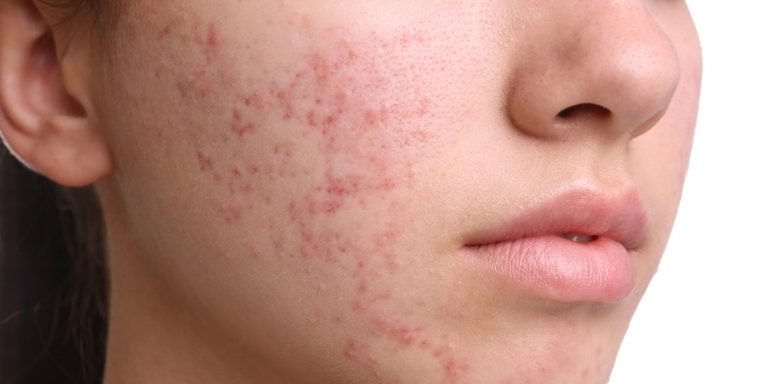
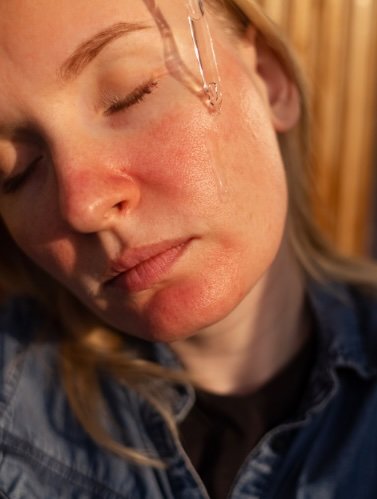
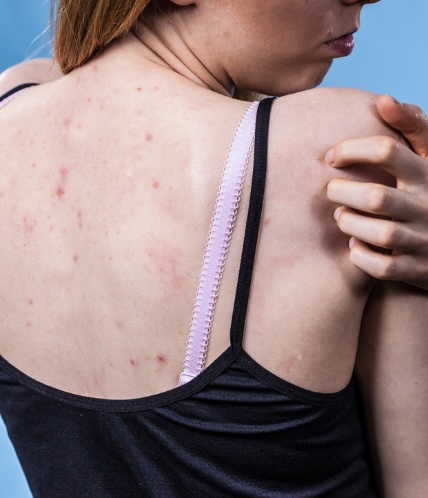
Acne and rosacea are two of the most commonly confused facial skin conditions because they can both cause redness, bumps and inflammation. As a result, many people spend months treating the wrong condition, leading to persistent symptoms and frustration.
Although they can appear similar, there are important differences to acne vs rosacea. One of the most useful distinguishing features is that acne causes blackheads and whiteheads (comedones), whereas rosacea does not. Recognising these differences is important because the two conditions have different underlying mechanisms and require different treatment approaches.
In this guide, Consultant Dermatologist Dr Derrick Phillips explains how to distinguish acne from rosacea, what to do if you have features of both conditions, and why an accurate diagnosis is the first step towards clearer, healthier skin.
Why Are Acne and Rosacea So Easily Confused?
Both acne and rosacea can cause facial redness, inflammatory papules and pustules, and both commonly affect adults well beyond adolescence. This overlap means rosacea is often mistaken for acne, resulting in treatments that fail to control symptoms or even aggravate the condition.
Despite these similarities, the underlying biology is very different. Acne is a disorder of the pilosebaceous unit, involving excess sebum production, follicular blockage and inflammation, which is why blackheads and whiteheads are characteristic features and why acne commonly affects the face, chest and back. Rosacea, by contrast, is a chronic inflammatory disorder with vascular dysregulation that primarily affects the central face. Because the underlying mechanisms differ, so too do the treatments, making an accurate diagnosis essential.
What Are the Key Differences Between Acne and Rosacea?
Use this quick comparison as a first-pass guide, a definitive diagnosis still requires a dermatologist assessment:
| Feature | Acne | Rosacea | Fungal Acne |
|---|---|---|---|
| Blackheads / whiteheads | Almost always present | Never present | Never present |
| Persistent background redness | Not typical | Characteristic | Not typical |
| Flushing triggers | Not typical | Heat, alcohol, sun, spice | Not typical |
| Visible blood vessels | Not present | Common | Not present |
| Distribution | Face, chest, back, jaw | Central face | Forehead, hairline, chest, back |
| Itch | Not typical | Not typical | Characteristic |
| Worsens with antibiotics | No | No | Yes |
| Typical age of onset | Teenage, early 20s | 30s–50s | Any age |
| Scarring | Common in severe cases | Rhinophyma in long-standing disease | Rare |
The single most reliable clinical indicator is the presence or absence of comedones, blackheads and whiteheads. Rosacea never causes these. If spots are appearing without any blackheads or whiteheads, rosacea is considerably more likely than acne.
Background Redness and Flushing
Rosacea is characterised by persistent background redness, a diffuse flush across the cheeks, nose, chin and forehead that persists between individual flare ups. This redness reflects underlying vascular and inflammatory changes and is often aggravated by heat, alcohol, sun exposure, spicy foods and emotional stress. Acne, by contrast, does not typically cause this pattern of persistent central facial redness. Although individual acne spots are inflamed, the surrounding skin is usually unaffected.
Distribution
Acne can affect the face, neck, chest and back, reflecting the distribution of sebaceous glands. Severe inflammatory acne may also involve the jawline and neck and carries a significant risk of permanent scarring.
Rosacea predominantly affects the central face, particularly the cheeks, nose, chin and forehead. Redness and inflammatory papules or pustules confined to this central distribution, especially when accompanied by flushing, are more suggestive of rosacea. Acne affecting the chest, back or jawline is much less likely to represent rosacea alone.
Visible Blood Vessels and Nasal Changes
Visible blood vessels (telangiectasia) across the cheeks and nose are a characteristic feature of rosacea and are not a feature of acne. Their presence alongside persistent redness and flushing strongly supports the diagnosis.
In longstanding or more severe rosacea, the skin of the nose may gradually thicken, leading to a bulbous appearance known as rhinophyma. This occurs almost exclusively in rosacea and does not develop in acne.
Age and Timing
Acne most commonly begins during adolescence but may persist into adulthood or develop for the first time in adult life, particularly in women.
Rosacea most often develops between the ages of 30 and 50. Although it is more common in women, men are more likely to develop severe phymatous changes such as rhinophyma.
Triggers
Acne may be influenced by hormonal changes, certain skincare products, stress and, in some individuals, diet. Rosacea has a different trigger profile, with flare ups commonly precipitated by heat, sunlight, alcohol, spicy foods, hot drinks, exercise and emotional stress.
A history of flushing or worsening redness after alcohol, hot drinks or changes in temperature is particularly suggestive of rosacea, although some patients have features of both conditions simultaneously.
The last sentence is worth adding because acne and rosacea frequently coexist, which fits nicely with the next section on mixed presentations.
Acne vs Rosacea in Darker Skin Tones
Distinguishing between acne and rosacea can be more challenging in darker skin tones because the signs clinicians often rely on, such as background redness, flushing and visible blood vessels, are less apparent in melanin rich skin. Instead, inflammation may present as warmth, burning, sensitivity or changes in pigmentation rather than obvious erythema. As a result, rosacea may go unrecognised or be diagnosed later than it would be in lighter skin tones.
For rosacea in darker skin, there are several important considerations:
- Background redness and flushing may be subtle or difficult to appreciate on visual inspection alone.
- Post inflammatory hyperpigmentation may become a prominent feature, with patients seeking treatment for persistent dark marks rather than facial redness.
- A history of flushing, burning or increased skin sensitivity may provide important diagnostic clues, even when redness is not obvious.
For acne in darker skin, post inflammatory hyperpigmentation is often more troublesome than the active spots themselves. Treatment therefore needs to address both the acne and the risk of pigmentation developing, rather than focusing solely on clearing the breakouts.
Where the diagnosis is uncertain, a dermatologist-led assessment is particularly valuable. Dr Phillips has extensive experience diagnosing and treating acne and rosacea across a wide range of skin tones and recognises that these conditions do not always present in the way described in traditional textbooks. Treatment is tailored to control the underlying inflammation while minimising the risk of post inflammatory hyperpigmentation.
For a full guide to skin conditions that are more common or present differently in darker skin tones, see 5 Skin Conditions More Common in Dark Skin Complexions.
Can You Have Acne and Rosacea at the Same Time?
Acne and rosacea can coexist in the same patient, which can make diagnosis and treatment more complex. The two conditions need to be treated individually, while taking care not to aggravate the other. Some acne treatments, for example, can be too irritating for rosacea prone skin, while inappropriate use of topical corticosteroids on the face can worsen rosacea and cause acne like eruptions.
Where both conditions are present, Dr Phillips tailors treatment to address each component while protecting the skin barrier and minimising irritation.
Could It Be Fungal Acne Rather Than Rosacea?
Another condition that can resemble acne is Malassezia folliculitis, sometimes referred to as “fungal acne”. Despite the name, it is not true acne. It is an inflammation of the hair follicles associated with Malassezia yeast, the same organism involved in seborrheic dermatitis (link).
Malassezia folliculitis typically causes crops of small, relatively uniform bumps that may be itchy and commonly affect the forehead, hairline, chest and back. Unlike acne, it does not produce true comedones, and the treatment is different.
Because it can resemble other follicular eruptions, establishing the correct diagnosis is important. Antibiotic treatment may aggravate Malassezia folliculitis in some patients, whereas appropriate antifungal treatment can help control the condition.
Why Does Getting the Diagnosis Right Matter?
Acne and rosacea may look similar, but the underlying processes are different. Acne involves the pilosebaceous unit, with follicular blockage, excess sebum production and inflammation. Rosacea is a chronic inflammatory condition characterised by vascular reactivity, facial inflammation and, in some patients, increased Demodex activity.
The treatments therefore differ. An accurate diagnosis allows therapy to be directed at the underlying condition rather than simply treating the appearance of the spots. Dr Phillips assesses both conditions carefully at consultation and, where acne and rosacea coexist, develops a treatment plan that addresses each component appropriately.
Dr Phillips rates the best rosacea treatments in this article.
Common Questions Asked in Clinic
How can I tell if I have acne or rosacea?
One of the most useful clues is the presence of blackheads or whiteheads, which are typical of acne and not a feature of rosacea. Rosacea is more likely to cause persistent background redness, flushing, visible blood vessels and inflammation concentrated across the central face, while acne can affect the face, neck, chest and back.
If you are unsure, a dermatologist can distinguish between the two and confirm the correct diagnosis before treatment is started.
Does rosacea cause blackheads?
No. Blackheads and whiteheads, or comedones, are features of acne and are not caused by rosacea. If comedones are present, acne is likely to be part of the diagnosis, although acne and rosacea can coexist.
Is adult acne the same as rosacea?
No. Both can affect adults and may appear similar, but they are different conditions. Adult acne is commonly influenced by sebaceous gland activity and hormonal factors, while rosacea is characterised by facial inflammation, vascular reactivity and flushing. Adult acne often affects the jawline and lower face, whereas rosacea more commonly affects the central face.
Why do acne treatments make rosacea worse?
Some acne treatments can irritate rosacea prone skin, particularly if they are introduced too aggressively or used when the diagnosis is incorrect. Ingredients such as benzoyl peroxide, salicylic acid and retinoids can increase dryness, stinging and redness in sensitive skin, even though some may still have a role in carefully selected patients.
Rosacea has a different underlying mechanism from acne, involving inflammation and vascular reactivity, with Demodex contributing in some patients. Treating rosacea as though it were simply acne may therefore aggravate symptoms without addressing the main drivers of the condition.
Could my spots be fungal acne rather than rosacea?
Possibly. Malassezia folliculitis, sometimes called “fungal acne”, causes small, relatively uniform bumps that are often itchy and commonly affect the forehead, hairline, chest or back. It does not cause true blackheads or whiteheads.
Because it can resemble other follicular conditions, including acne, the most reliable way to distinguish between them is through clinical assessment. Antibiotics may aggravate Malassezia folliculitis in some patients, but I would avoid presenting this as a diagnostic test in itself
Can rosacea cause pimples?
Yes. Papulopustular rosacea causes red papules and pustules that can closely resemble acne. Unlike acne, it does not cause blackheads or whiteheads and usually occurs on a background of persistent facial redness, flushing or sensitivity.
Where inflammatory spots occur without comedones and are concentrated across the central face, rosacea should be considered, although acne and rosacea can also coexist.
Is rosacea permanent?
Rosacea is a long term condition that cannot currently be cured, but it can often be controlled very effectively. Treatment may include prescription medication, trigger management and, where appropriate, laser or light therapy.
Many patients achieve long periods of good control once the diagnosis and dominant features are identified. The aim is to reduce redness, inflammation and flare frequency while maintaining long term skin stability.
Author: Dr Derrick Phillips, Consultant Dermatologist, MBBS BSc (HONS) FRCP (Dermatology)
Last reviewed: August 2026