
Male pattern hair loss is the most common cause of hair thinning in men. For those looking for effective, evidence-based treatment options, minoxidil for men remains one of the most widely used and clinically supported hair loss therapies.
Available in both topical and tablet form, this treatment is commonly recommended to slow hair loss and promote regrowth.
Dr Derrick Phillips, a consultant dermatologist in London, explains how minoxidil works, who it is suitable for, and what to expect from topical and oral treatments.
What Is Male Pattern Hair Loss?
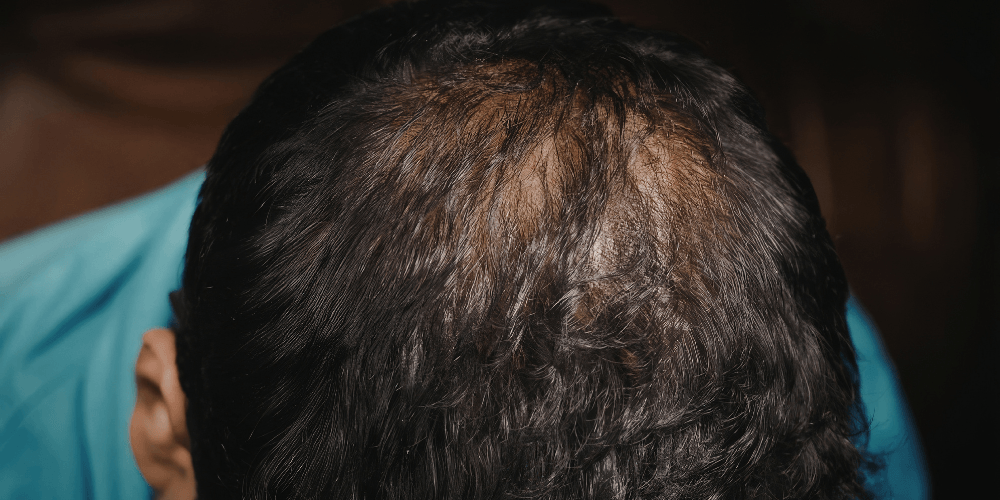
Male pattern hair loss, also known as androgenetic alopecia, is a common condition driven by a sensitivity of hair follicles on particular parts of the scalp to androgens (male hormones).
Over time, this sensitivity leads to:
- Gradual shortening of the hair growth cycle
- Miniaturisation of hair follicles
- Progressive hair thinning, and eventual loss of hair on the top of the scalp
It is a chronic condition, meaning treatment focuses on slowing progression and increasing hair density.
What Is Minoxidil?
Minoxidil is a medication originally developed as an oral treatment for high blood pressure. During its use, increased hair growth was observed as a side effect, which led to its development as a treatment for hair loss.
A similar pattern is seen with Spironolactone in women. While spironolactone was also initially used to treat high blood pressure, it is now widely prescribed in dermatology to manage hormonal acne and female pattern hair loss due to its anti-androgen effects.
This highlights a broader principle in dermatology: medications developed for one indication can have clinically valuable effects in treating skin and hair conditions.
Today, topical minoxidil is FDA approved for male pattern hair loss and is widely used for androgenetic alopecia, while oral minoxidil is used off-label in selected cases under medical supervision.
How Does Minoxidil Work?
The exact mechanism of action is not fully understood, however, current evidence suggests that minoxidil increases the blood flow to hair follicles and prolongs the growth phase.
This can help stabilise hair loss and support regrowth in some patients, particularly when treatment is started early.
Topical Minoxidil for Men
Topical minoxidil is the most commonly used treatment for male pattern hair loss. It is easy to apply and does not require a prescription in the UK. It can be purchased as a solution or in foam preparation, and it is available in 2% and 5% strengths. The best evidence is for 5% Minoxidil applied twice daily. Many people find the foam preparation easier to apply to the scalp, and it is less likely to cause irritation than the solution due to the absence of propylene glycol.
Benefits include:
- Slows progression of hair loss
- May promote regrowth in thinning areas
- Generally well tolerated
Considerations:
- Requires consistent, long-term use
- Initial shedding may occur as hair cycles reset
- Results typically become noticeable after 3–6 months
Oral Minoxidil for Hair Loss
Oral minoxidil is an alternative option used in selected cases, particularly when topical treatments are not effective or not well tolerated. Typically, oral minoxidil is prescribed under medical supervision at a low dose (2.5mg – 5mg)
Benefits include:
- Can be effective in patients who do not tolerate topical treatment
- May improve overall hair density
Considerations:
- Requires careful dosing and monitoring
- Not suitable for all patients
- Should only be used under the guidance of a dermatologist
Is Minoxidil Effective?
Minoxidil is considered a first-line treatment for male pattern hair loss, with typical outcomes being slowing of hair loss, thickening of existing hair and regrowth.
It is important to note that results vary, and continued use is required to maintain benefits.
Side Effects and Tolerability
Minoxidil is generally well tolerated, particularly in topical form. With topical minoxidil, patients may experience scalp irritation or dryness, itching or flaking.
With oral minoxidil, patients may experience increased body hair growth, fluid retention and cardiovascular effects, however, these are uncommon at the low doses as prescribed for hair loss.
Most side effects are mild, but oral therapy should always be medically supervised.
Who Is Minoxidil Suitable For?
Minoxidil is most effective for men in the early to moderate stages of hair loss, those with thinning at the crown or vertex and male patients seeking to maintain existing hair density.
It may be less effective in advanced cases where follicles are no longer active.
When to Consult a Dermatologist for Hair Loss
While minoxidil is widely available, professional guidance is important if:
- Hair loss is rapidly progressing
- There is uncertainty about the diagnosis
- Over-the-counter treatments are not effective
- You are considering oral minoxidil
A dermatologist can confirm the diagnosis and recommend a personalised treatment plan, which may include combination therapy.
If you’re experiencing hair loss or patches on your beard, it could be alopecia barbae. Learn more in this video.