Sunscreen is an essential part of any effective skincare routine and a cornerstone of the best sun protection practices. Daily use of sun protection helps protect the skin from harmful ultraviolet (UV) radiation, which contributes to premature ageing, hyperpigmentation, and an increased risk of skin cancer.
With a wide range of products available, you may be wondering if mineral vs. chemical sunscreen has any distinct differences when it comes to achieving the best sun protection for your skin. Understanding how each type works can help you make an informed decision about the most effective way to protect your skin every day.
Why Sun Protection Matters
Ultraviolet radiation is one of the primary external factors driving skin damage.
- UVA rays penetrate deeper into the skin and contribute to ageing and pigmentation
- UVB rays primarily affect the surface and are responsible for sunburn and DNA damage
Chronic exposure leads to:
- Fine lines and wrinkles
- Uneven pigmentation and worsening melasma
- Loss of skin elasticity
- Increased risk of skin cancers
This is why consistent, daily sun protection is a cornerstone of dermatological care.
Types of Sunscreen: Mineral vs Chemical
Sunscreens are typically formulated with organic (chemical) filters, inorganic (mineral) filters, or a combination of both.
It is important to note that “organic” in this context refers to carbon-based compounds in chemistry, rather than the marketing definition of “natural” or “clean” ingredients.
What Is Chemical Sunscreen?
Chemical sunscreens contain organic filters that absorb UV radiation and convert it into heat, which is then released from the skin.
Common characteristics:
- Lightweight and easy to apply
- Often invisible on the skin (no white cast)
- Suitable for daily wear under makeup
Some organic filters have been studied for their potential environmental impact. In particular, certain ingredients have been suggested to contribute to coral reef damage, and research into their long-term ecological effects is ongoing.
What Is Mineral Sunscreen?
Mineral sunscreens use inorganic filters, typically zinc oxide or titanium dioxide.
Traditionally, these were thought to act by reflecting UV rays. However, modern formulations—particularly those using nanoparticle technology—primarily absorb UV radiation, with only a small percentage (less than 5%) being scattered.
Common characteristics:
- Broad-spectrum protection
- Often recommended for sensitive or reactive skin
- Less likely to cause irritation
- May leave a visible white cast depending on the formula
- Can feel heavier than chemical sunscreens

Do Mineral and Chemical Sunscreens Work Differently?
While historically described as working differently, modern mineral and chemical sunscreens function in very similar ways.
Both Types of Sunblock:
- Absorb UV radiation
- Prevent damage at the skin level
- Provide effective protection when applied correctly
The key difference today lies more in formulation, skin tolerance, and personal preference rather than mechanism alone.
Which Sunscreen Is Better?
From a clinical perspective, the most important factor is not whether a sunscreen is mineral or chemical—but whether it is:
- Broad-spectrum (protects against UVA and UVB)
- SPF 30 or higher (preferably 50+)
- Applied consistently and in adequate amounts
For some, mineral sunscreens may be preferable for sensitive or acne-prone skin, while chemical sunscreens may be preferred for cosmetic elegance and daily wear.
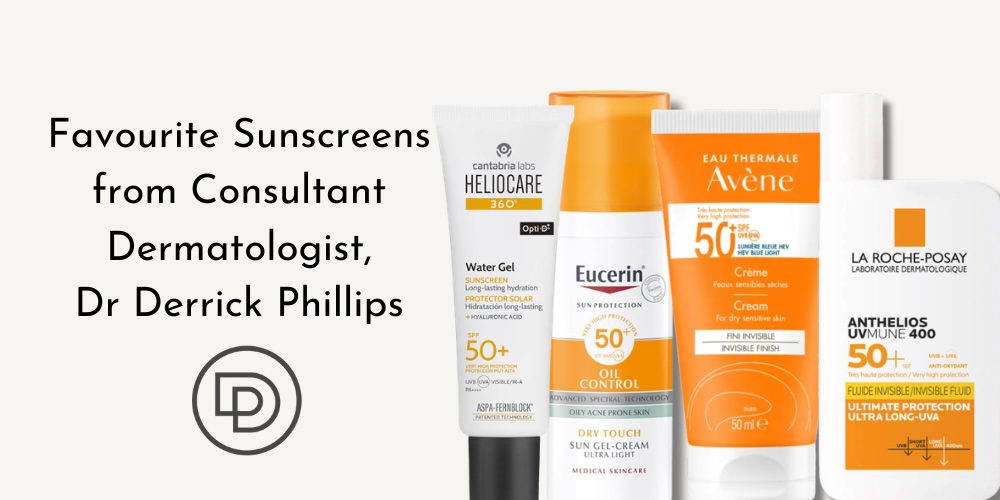
Some of Dr Derrick Phillips’ favorite sunscreens are:
- Eucerin Sun Gel-Cream Oil Control SPF 50+
- Anthelios UVMune 400 Invisible Fluid Spf50+ Sun Cream
- Avene SPF 50+ Cream
- Heliocare 360 Water-gel SPF50
Beyond Sunscreen: A Complete Sun Protection Strategy
Sunscreen is only one component of effective photoprotection. For optimal results, dermatologists recommend combining sunscreen with:
- Protective clothing
- Hats and sunglasses
- Shade-seeking behaviour during peak UV hours
Dr Derrick Phillips breaks down UV Clothing Protection here and more sun protection tips in this inews feature.
The Bottom Line on Sunscreen
Both mineral and chemical sunscreens are effective forms of sun protection when used correctly. Advances in formulation mean that the difference between the two is less about effectiveness and more about individual preference and skin tolerance.
Ultimately, the best sunscreen is the one you will use consistently.