Seborrhoeic dermatitis is a common, chronic skin condition that often follows a relapsing course. Many people manage symptoms for years with shampoos, moisturisers or over the counter remedies before the diagnosis is recognised and treatment is properly tailored.
The condition is associated with an inflammatory response to Malassezia, a yeast that forms part of the skin’s normal microbiome, particularly in areas rich in sebaceous glands. Because Malassezia naturally lives on the skin, treatment is aimed at controlling inflammation and reducing yeast activity rather than eliminating it permanently.
In this guide, Consultant Dermatologist Dr Derrick Phillips explains what causes seborrhoeic dermatitis, where it commonly appears on the scalp, face and body, the most effective treatment options, and the particular considerations for patients with Afro textured hair.
What is Seborrheic Dermatitis?
Seborrheic dermatitis is a chronic inflammatory condition caused by an abnormal immune response to Malassezia yeast. In people with seborrheic dermatitis, the yeast triggers an inflammatory reaction that produces the characteristic redness, flaking and scale. It tends to follow a relapsing and remitting pattern, with periods of relative calm interrupted by flares, often in response to stress, seasonal changes, illness or hormonal shifts.
It is not contagious and is not caused by poor hygiene, though it can be exacerbated by skincare choices, certain products and environmental factors.
Where Does Seborrheic Dermatitis Appear?
Seborrheic dermatitis affects areas where the sebaceous glands are most concentrated. The most common sites are:
- The scalp — where it presents as dandruff at its mildest and as thicker, more adherent scale with redness and itching at its more severe end
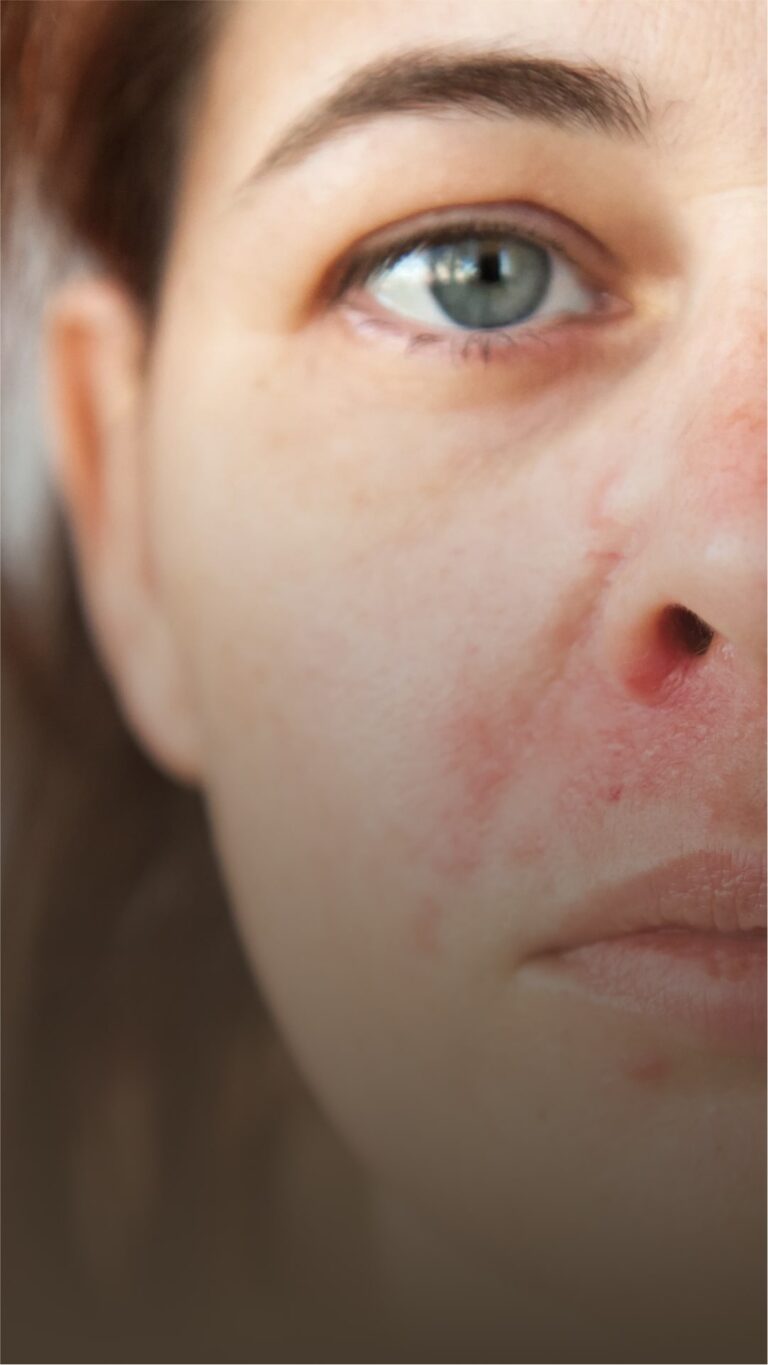
- The face — particularly the nasolabial folds (the creases between the nose and mouth), eyebrows, forehead, and around the ears
- The beard area — in men, the beard and moustache area is a common site, where scale and redness develop within the hair
- The chest and upper back — where a broader area of redness and greasy scale can develop, particularly in men
- Skin folds — including the armpits, groin and under the breasts

Seborrheic Dermatitis and Eczema
Seborrhoeic dermatitis is a common form of eczema that affects areas of the skin rich in sebaceous (oil) glands, including the scalp, face, ears and central chest. It is characterised by redness, scaling and itch, and often follows a relapsing course with periods of flare and remission.
Treatment is broadly similar to that of other forms of eczema, with the aim of reducing inflammation, relieving symptoms and restoring the skin barrier. The main difference is the important role of Malassezia, a yeast that naturally lives on the skin. For this reason, antifungal shampoos or creams are often incorporated into treatment alongside topical corticosteroids or topical calcineurin inhibitors where appropriate.
Dr Phillips tailors treatment to the area affected, the severity of symptoms and the frequency of flare ups, with the aim of achieving long term control while minimising the need for stronger treatments.
How Does Seborrheic Dermatitis Affect the Scalp, and Is It the Same as Dandruff?
Scalp involvement is the most common presentation of seborrhoeic dermatitis, and dandruff can be considered part of the same spectrum. Both are associated with an inflammatory response to Malassezia yeast, which naturally lives on the scalp.
At the milder end, symptoms may be limited to fine, persistent flaking. More established seborrhoeic dermatitis can cause thicker, more adherent scale with redness, itching and irritation. As symptoms become more pronounced, standard cosmetic shampoos are often insufficient and medicated antifungal shampoos or prescription anti-inflammatory treatments may be needed.
If scalp flaking is persistent, associated with redness or itch, or has not improved with medicated shampoo, a dermatologist-led assessment can help confirm the diagnosis and develop an appropriate treatment plan.
How Is Seborrheic Dermatitis Managed in Afro-Textured Hair?
For patients with Afro textured hair, seborrhoeic dermatitis presents specific management challenges that are often under recognised. Medicated antifungal shampoos are highly effective but can be drying, particularly in hair types that are naturally drier and washed less frequently. Treatment therefore needs to balance control of the inflammation with maintenance of hair and scalp health.
In many patients, selenium sulphide based shampoos are better tolerated than ketoconazole formulations, although the most appropriate option varies between individuals. Dr Phillips will recommend a regimen based on the severity of the condition, hair care practices and how well previous treatments have been tolerated.
Oils are commonly used as part of Afro textured hair care routines, but during an active flare they can sometimes worsen seborrhoeic dermatitis by creating an environment that favours Malassezia. For this reason, Dr Phillips may advise reducing or temporarily pausing scalp oil application until the inflammation has settled, before reintroducing products in a way that supports both scalp health and hair care.
A further consideration in darker skin tones is petaloid seborrhoeic dermatitis, a recognised variant in which the condition presents as arcuate or ring shaped, finely scaly plaques with hypopigmentation or hyperpigmentation rather than the classic erythematous, greasy scale. This presentation can resemble other inflammatory skin conditions, making accurate diagnosis particularly important. Where the diagnosis is uncertain, Dr Phillips will confirm it before recommending treatment.
Seborrheic Dermatitis on the Face
Facial seborrhoeic dermatitis most commonly affects the nasolabial folds, eyebrows, hairline and the skin around the ears and nose. It typically presents with redness and a fine, sometimes greasy scale, and can resemble conditions such as rosacea, perioral dermatitis or simply dry, irritated skin. The distribution across sebaceous areas of the face is often an important clue to the diagnosis.
Treatment usually involves topical antifungal therapy, such as ketoconazole or ciclopirox, together with short courses of mild topical corticosteroids during flares where appropriate. Topical calcineurin inhibitors may also be useful for longer term control in sensitive facial areas. Treatment is tailored to the severity, distribution and frequency of flare ups.
Does Diet Affect Seborrheic Dermatitis?
Diet is one of the most commonly asked about factors in seborrhoeic dermatitis, but the evidence remains limited. At present, there is insufficient evidence to recommend any specific dietary intervention for the treatment or prevention of seborrhoeic dermatitis.
Some people find that certain foods appear to coincide with flare ups, but any dietary modification should be undertaken with the guidance of a registered dietitian to ensure nutritional adequacy. Dietary changes should be viewed as an adjunct to, rather than a replacement for, appropriate medical treatment.
What Triggers Seborrheic Dermatitis Flares?
Seborrhoeic dermatitis is associated with an inflammatory response to Malassezia yeast, but several factors can influence when and how severely it flares:
• Stress — which is commonly reported to worsen symptoms
• Seasonal change — with flares often more noticeable during colder, drier months
• Illness or immunosuppression —, which can make seborrhoeic dermatitis more severe
• Certain neurological conditions including Parkinson’s disease, where seborrhoeic dermatitis is more common
• Skincare and haircare products that irritate the skin or scalp may aggravate symptoms
• Diet is often asked about, but the evidence linking specific foods or nutritional deficiencies to seborrhoeic dermatitis remains limited

How Is Seborrheic Dermatitis Treated?
Treatment cannot permanently eliminate Malassezia because it forms part of the normal skin microbiome, but it can control yeast activity, reduce inflammation and manage scale effectively.
Treatment usually targets three areas: reducing Malassezia, calming inflammation and removing excess scale.
- Ketoconazole 2% shampoo (Nizoral) — a well established antifungal treatment for scalp seborrhoeic dermatitis. It is usually left on the scalp for several minutes before rinsing. Some patients find it drying, particularly with Afro textured or naturally drier hair, so frequency should be adjusted according to tolerance.
- Selenium sulphide or zinc pyrithione shampoos — effective alternatives that may be better tolerated by some patients. The most suitable medicated shampoo depends on hair type, severity and individual response.
- Topical antifungal creams — such as ketoconazole or ciclopirox, used for facial or body involvement during active flares.
- Topical corticosteroids — used in short courses to reduce active inflammation, with potency selected according to the area being treated. Particular care is required on the face and other sensitive sites.
- Calcineurin inhibitors — tacrolimus or pimecrolimus can be useful steroid sparing options for facial seborrhoeic dermatitis, particularly where longer term maintenance is needed.
- Scalp oils and haircare products — some oils and occlusive products may aggravate symptoms in certain patients during active flares. Rather than avoiding all oils routinely, Dr Phillips tailors advice according to the individual haircare routine and how the scalp responds.
- Maintenance treatment — for patients with frequent recurrence, intermittent use of an antifungal shampoo or topical treatment between flares can help maintain control.
When Should I See a Dermatologist for Seborrheic Dermatitis?
Seborrhoeic dermatitis can resemble other inflammatory skin conditions, including psoriasis, rosacea, contact dermatitis and atopic eczema. In some patients, more than one condition may be present at the same time, such as sebopsoriasis.
A dermatologist-led assessment is particularly helpful when over the counter shampoos or antifungal creams are not providing adequate control, when the diagnosis is uncertain, or when symptoms are recurrent or affecting sensitive areas such as the face. Dr Phillips will assess the pattern and severity of the condition, consider any overlapping diagnoses and develop a treatment plan tailored to the area affected, your hair type and how frequently the condition flares.
FAQs
What is the best shampoo for seborrheic dermatitis?
Ketoconazole 2% shampoo (Nizoral) is one of the most established treatments for scalp seborrhoeic dermatitis and has a strong evidence base. It is available over the counter and is usually left on the scalp for several minutes before rinsing.
However, the best shampoo varies between patients. Ketoconazole can be drying, particularly in Afro textured or naturally drier hair, and some patients may tolerate selenium sulphide based shampoos better. The choice should therefore take into account hair type, symptom severity and how the scalp responds to treatment.
Is seborrheic dermatitis the same as dandruff?
Dandruff and seborrhoeic dermatitis are part of the same spectrum and are associated with the same underlying inflammatory response to Malassezia yeast. Dandruff represents the milder end, typically causing fine scalp flaking without significant inflammation. Seborrhoeic dermatitis is more severe, with redness, itch and more adherent scale, and often requires prescription treatment in addition to medicated shampoos.
Can seborrheic dermatitis be cured?
No. Because Malassezia is a permanent part of the skin’s flora, seborrheic dermatitis cannot be eliminated, but it can be very effectively controlled with appropriate treatment and maintenance. The goal is suppressing flares and extending the periods of remission rather than seeking a permanent resolution.
Is seborrheic dermatitis contagious?
No. It is an inflammatory reaction to a yeast that is part of the normal skin flora, not an infection that can be passed from person to person.
Can I use oils on my scalp if I have seborrheic dermatitis?
Oils may need to be reduced or paused during active flares, as some formulations can worsen seborrhoeic dermatitis in certain patients. This may relate to the way Malassezia interacts with lipids on the skin. Once the flare has settled, oils can often be reintroduced cautiously according to tolerance, while medicated shampoo or other maintenance treatment is continued as needed.
How is seborrheic dermatitis different from psoriasis?
Both seborrhoeic dermatitis and psoriasis can cause scalp redness and scaling, but there are some typical differences. Psoriasis often produces thicker, more clearly defined plaques with silvery scale and may be accompanied by psoriasis elsewhere on the body. Seborrhoeic dermatitis more commonly causes finer, greasier scale in areas rich in sebaceous glands.
The two conditions can also overlap, a presentation sometimes referred to as sebopsoriasis. Where the diagnosis is uncertain, a dermatologist can distinguish between them and tailor treatment accordingly.
Author: Dr Derrick Phillips, Consultant Dermatologist, MBBS BSc (HONS) FRCP (Dermatology)
Last reviewed: August 2026