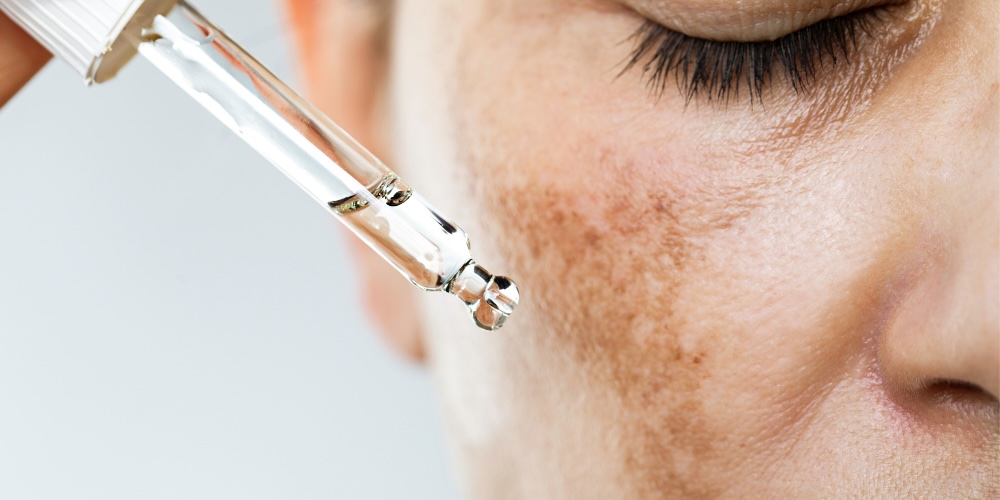
Melasma is a common and often persistent pigmentary condition that causes dark brown patches on the face. These patches most commonly appear on the forehead, cheeks, temples, and upper lip, and can be difficult to fade without targeted treatment.
For many people, melasma is more than a cosmetic concern. It can significantly affect confidence and quality of life, particularly because it tends to recur and worsen with sun exposure or hormonal changes.
As Dr Derrick Phillips explains, one of the most effective treatment options, when used appropriately, is tranexamic acid for melasma. Available in both oral and topical forms, tranexamic acid has been shown in clinical studies to improve the hyperpigmentation by targeting the biological pathways that drive pigment production.
This article explains how tranexamic acid works for melasma, why melasma develops in the first place, and how dermatologists use tranexamic acid as part of a personalised melasma treatment plan.
What Is Melasma?
Melasma is an acquired hyperpigmentation disorder characterised by symmetrical patches of darker skin on sun-exposed areas of the face. Unlike sun spots or freckles, melasma tends to be broader, deeper, and more resistant to treatment.
It is particularly common in individuals with medium to darker skin tones, but it can affect all skin types. Melasma often develops gradually and may fluctuate depending on sun exposure, hormonal changes, and inflammation.

What Causes Melasma?
Melasma is a multifactorial condition, meaning it develops due to a combination of triggers rather than a single cause.
Sun Exposure and Blue Light
Ultraviolet (UV) radiation is one of the strongest drivers of melasma. UV light stimulates melanocytes — the cells responsible for pigment production — causing increased melanin synthesis.
Emerging research also shows that visible light, including blue light, can worsen melasma, particularly in darker skin types. This explains why melasma may persist even in people who avoid direct sunlight but are exposed to ambient daylight.
Hormonal Factors
Melasma is strongly associated with high estrogen states, including:
- Pregnancy
- Oral contraceptive use
- Hormone replacement therapy
Estrogen increases melanocyte activity, making the skin more prone to pigment overproduction. This is why melasma is sometimes referred to as the “mask of pregnancy.”
Genetic Predisposition
Some individuals are genetically more susceptible to melasma due to increased melanocyte sensitivity and pigment response.
Why Tranexamic Acid Is Used for Melasma
Tranexamic acid is a medication originally developed to reduce bleeding. In dermatology, it has gained increasing attention as a melasma treatment because of its effects on pigment-regulating pathways.
How Tranexamic Acid Works
Understanding how tranexamic acid works helps explain why it can be effective for melasma.
Tranexamic Acid:
- Reduces signalling pathways that stimulate melanocytes
- Decreases inflammation-related pigment activation
- Interferes with plasmin activity, which is linked to melanin production
By interrupting these processes, tranexamic acid helps reduce excess pigment formation and supports gradual lightening of melasma patches.
This mechanism of action is particularly useful in melasma, where pigment production is driven by both inflammation and hormonal signalling rather than sun exposure alone.
Tranexamic Acid and Melasma: What the Evidence Shows
Clinical studies have shown that tranexamic acid and melasma respond well when the treatment is used consistently and appropriately.
Research demonstrates that:
- Oral tranexamic acid can significantly reduce melasma severity over several weeks to months
- Topical tranexamic acid improves pigmentation when applied regularly as part of a skincare routine
- Both forms are generally safe and well tolerated in appropriately selected patients
Importantly, results tend to improve over time, especially when tranexamic acid is combined with strict sun protection and other melasma treatments.
Oral vs Topical Tranexamic Acid
Oral Tranexamic Acid
Oral tranexamic acid works systemically, affecting pigment pathways throughout the body. It is usually prescribed for moderate to severe melasma that has not responded adequately to sunscreen and topical treatments alone.
Because it is a systemic medication, oral tranexamic acid is not suitable for everyone and must be prescribed by a dermatologist after reviewing medical history and risk factors.
Topical Tranexamic Acid
Topical formulations — such as creams or serums — allow tranexamic acid to act directly on affected areas of skin. These products are often used:
- As a standalone option for mild melasma
- Alongside oral treatment
- As part of long-term maintenance
Topical tranexamic acid is commonly found in medical-grade skincare and is often better tolerated by sensitive skin when used correctly.
Why Sunscreen Is Essential for Melasma Treatment
Regardless of the treatment used, sunscreen is the most important component of melasma management.
UV and visible light exposure:
- Stimulate melanocytes
- Deepen existing pigmentation
- Counteract the benefits of active treatments
For anyone undergoing melasma treatment — including tranexamic acid — daily use of a broad-spectrum SPF 30–50 is essential. Many dermatologists recommend sunscreens that also protect against visible light, particularly for patients with skin of colour.
Without consistent sun protection, even the best treatment for melasma on the face may produce limited or short-lived results.
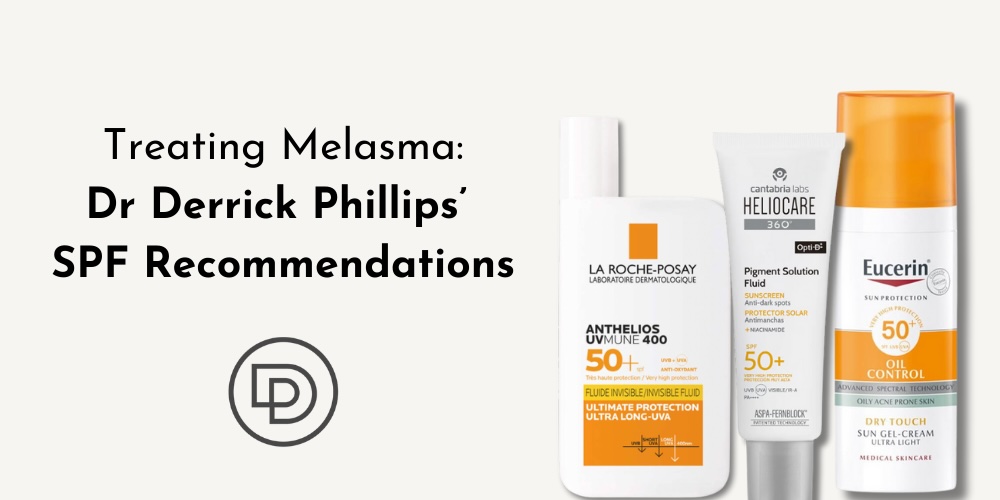
Dr Derrick Phillip’s favourite sunscreens include the Eucerin Sun Gel-Cream Oil Control SPF 50+, Anthelios UVMune 400 Invisible Fluid Spf50+ Sun Cream and Heliocare 360 Pigment Solution Fluid.
Additional Melasma Treatments Used by Dermatologists
Tranexamic acid is often used as part of a combined approach to melasma treatment.
Chemical Peels
Superficial chemical peels can help accelerate cell turnover and gradually lighten pigmentation when performed carefully and conservatively.
Find more about Dr Derrick Phillips cosmetic dermatology and laser services for facial hyperpigmentation.
Cosmeceuticals
Evidence-based topical treatments include:
- Azelaic acid
- Retinoids
- Vitamin C
- Niacinamide
- Other pigment-regulating agents
Oral Treatments
In selected cases, dermatologists may consider oral treatments that support pigment regulation or reduce inflammation, depending on the individual’s needs.
Combining these approaches often leads to more consistent and longer-lasting improvement.
Is Tranexamic Acid Right for You?
Although tranexamic acid is a safe, well-tolerated, and effective treatment for many people with melasma, it is not appropriate for everyone.
A consultant dermatologist will assess:
- The pattern and depth of pigmentation
- Hormonal and lifestyle triggers
- Skin type and sensitivity
- Medical history and risk factors
This personalised approach ensures that treatment is both effective and safe — and avoids unnecessary or inappropriate therapy.